Every year in November, people all over the UK go quiet at 11 o'clock in the morning. Many of them wear a red poppy. You may have heard the phrase 'the 11th hour of the 11th day of the 11th month'. Here is what it means, and why we still remember it today.
What happened on 11 November 1918?
The First World War began in 1914 and lasted more than four years. In November 1918, Germany and the Allies (the countries fighting against Germany, including Britain) agreed an armistice. An armistice is an agreement to stop fighting. It was signed at 5 o'clock in the morning on 11 November 1918, in a railway carriage at Compiègne, in France. The photo on our 11 November page shows officers standing beside that carriage in the forest.
The armistice did not start straight away. It came into effect at 11 o'clock that morning, and then the guns fell silent.
The 11th hour of the 11th day of the 11th month
So the war's fighting ended:
- at the 11th hour (11 am),
- on the 11th day of the month,
- of the 11th month (November is the eleventh month of the year).
That is why 11 November is called Armistice Day, and why the silence each year is held at exactly 11 am. Can you work out how many years ago 1918 was? Our 11 November page has a 'How long ago?' time machine to help.
The two-minute silence
On 6 November 1919, King George V sent a message asking people to keep a silence at the 11th hour of the 11th month. Armistice Day has been marked with a two-minute silence every year since 1919.
Today, people in the UK stop whatever they are doing at 11 am on 11 November and stay quiet for two minutes. There is also a two-minute silence at 11 am on Remembrance Sunday.
What is Remembrance Sunday?
Remembrance Sunday is the second Sunday in November, the Sunday nearest to Armistice Day. Since 1956 the national service of remembrance has been held on that day at the Cenotaph, a war memorial on Whitehall in London.
The Cenotaph and the Unknown Warrior
Two years after the armistice, on 11 November 1920, King George V unveiled the stone Cenotaph in Whitehall. On the same day, a British serviceman from the First World War whose name nobody knew was buried in Westminster Abbey. He is called the Unknown Warrior, and he stands for all the people who died and were never named. The photo at the top of this page shows his grave, edged with poppies.
Why do people wear poppies?
During the war, the fighting in France and Belgium churned up the ground. Poppy seeds that had been buried were brought up to the surface, and when they sprouted, bright red poppies covered the battlefields.
In May 1915, a Canadian doctor called John McCrae was moved by the flowers and wrote a poem we know today as 'In Flanders Fields'. The poppy became a symbol of remembrance.
In 1921, the British Legion (now the Royal British Legion) held its first 'Poppy Appeal'. It raised over £100,000, which was a huge sum then, to help people who had served in the war find homes and jobs. The Royal British Legion says the poppy remembers those who have served, and stands for hope for a peaceful future.
Other armistices in our calendar
The fighting did not end everywhere on the same day. These stories from our calendar tell more of the story:
- 30 Oct 1918 The Armistice of Mudros ends the fighting with the Ottoman EmpireThe Ottoman Empire signed the Armistice of Mudros, ending its fighting with the Allies in the Middle East during the First World War. An armistice is…
-
11 Nov
1918 The Armistice ends the fighting of the First World WarEarly in the morning, Germany and the Allies, including Britain, signed an armistice in a railway carriage in a forest near Compiègne, in France. An …
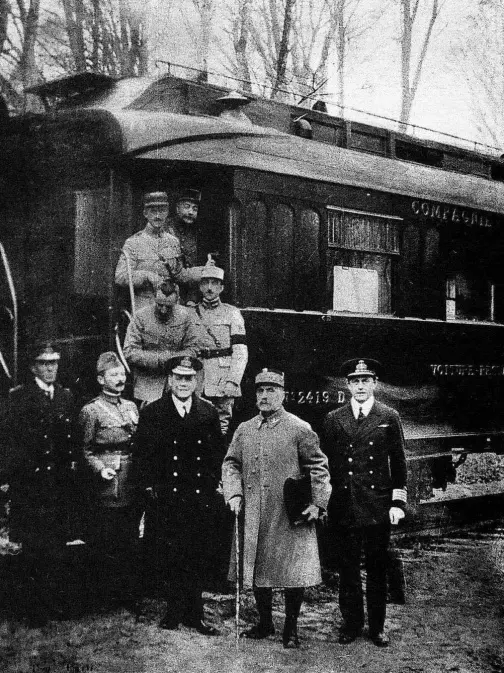
Photo: Unknown author, Public domain
-
11 Nov
1920 The Cenotaph is unveiled and the Unknown Warrior is laid to restThe Cenotaph, designed by Sir Edwin Lutyens, was unveiled on Whitehall in London as the UK's national memorial to those from Britain and its empire w…
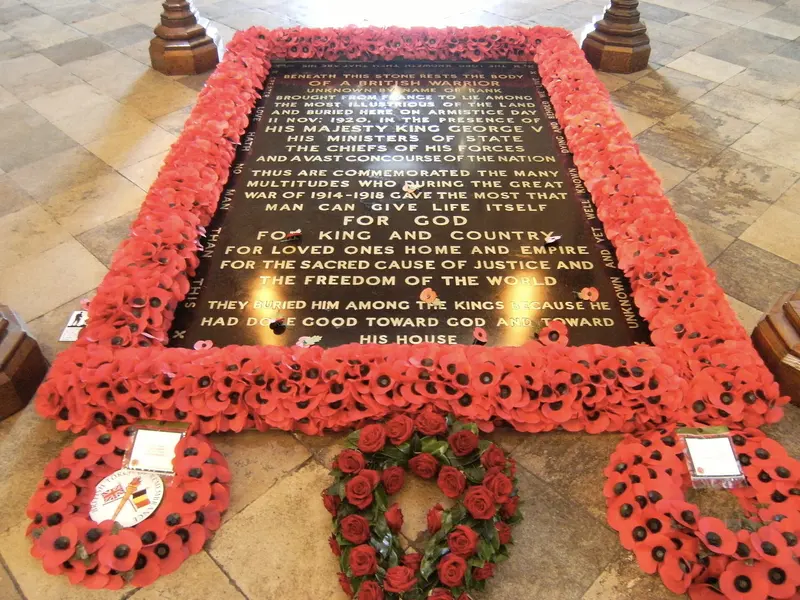
Photo: Mike from England, CC BY-SA 2.0
- 10 Jan 1920 The Treaty of Versailles takes effect, ending the First World WarThe Treaty of Versailles came into force, officially ending the First World War between Germany and most of the Allied Powers. The fighting had alrea…
Try this
- Two minutes. How long do two minutes of silence feel? Try it with your class or family, then talk about what you thought about.
- Count the elevens. Write out the date and time of the armistice in numbers. How many 1s can you find?
- Your local memorial. Many towns and villages have a war memorial. Find yours and look at when it was put up.
- Poppy poem. 'In Flanders Fields' is a short poem. Read it with a grown-up and talk about why the poet chose poppies.
You can find more stories from this time on our November page, and the story of how women won the vote, just weeks after the armistice, in our votes for women timeline.
Where our facts come from
The dates and times of the armistice come from the National Army Museum. The two-minute silence, Remembrance Sunday, the Cenotaph, the Unknown Warrior and the poppy come from the Royal British Legion. We checked them on 23 November 2026. The stories in the list come from our calendar's day pages, which credit the Wikipedia articles they are based on.