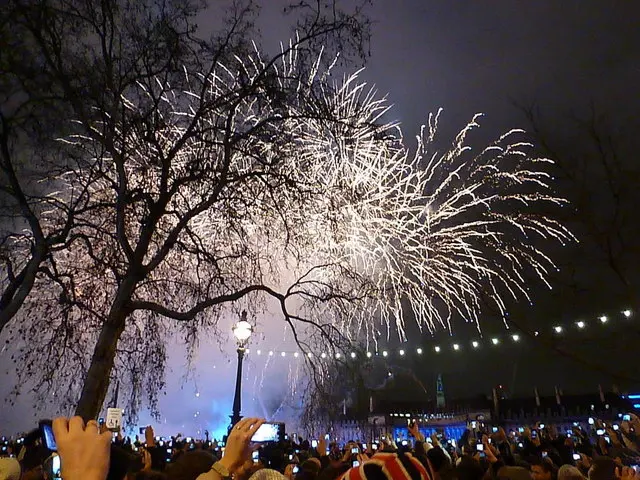
On the night of 31 December, people all over the world count down to midnight and welcome a brand new year. But the year hasn't always started on 1 January. Here are some of the true stories behind New Year, and some surprising things that happened on New Year's Eve and New Year's Day.
Who chose 1 January?
The month of January is named after Janus, the Roman god of gateways and beginnings. That makes it a good fit for the start of the year.
But in Britain the year didn't always change in January. Until 1600, the year number changed on 25 March, in the spring. On 1 January 1600, Scotland started counting each new year from 1 January instead. England kept 25 March for much longer. It only switched to 1 January after a law called the Calendar (New Style) Act 1750.
So for about 150 years, Scotland and England started their years on different days.
Hogmanay
Hogmanay is the Scots word for the last day of the year and for welcoming the New Year in the Scottish way. Celebrations often carry on into New Year's Day and 2 January, which is a bank holiday in Scotland. A favourite custom is first-footing: visiting friends and neighbours just after midnight, as the first guest is said to bring luck. All around the world, people sing 'Auld Lang Syne', a Scots poem by Robert Burns. Find out more on our 31 December page.
New Year's Eve surprises
- A dinner inside a dinosaur. On New Year's Eve 1853, the sculptor Benjamin Waterhouse Hawkins held a dinner inside the mould of one of his Iguanodon models. His life-size sculptures, made for Crystal Palace Park in south London, were the first dinosaur sculptures in the world.
- The first ball drop. On New Year's Eve 1907, New York City held its first ball drop in Times Square. It became a yearly event.
- A missing day. In Kiribati, a country of islands in the Pacific Ocean, 31 December 1994 was skipped altogether when some of its islands moved to new time zones. That makes Kiritimati one of the first inhabited places on Earth to see in each New Year.
New Year's Day firsts
Lots of big changes have started on 1 January, because it's a neat place to begin.
- 1801. The Kingdom of Great Britain and the Kingdom of Ireland joined to become the United Kingdom of Great Britain and Ireland. The Union Flag got a new design, adding the red diagonal cross of Saint Patrick.
- 1801. On the very same day, the Italian astronomer Giuseppe Piazzi spotted Ceres, the first object found in the asteroid belt between Mars and Jupiter.
- 1948. Britain's 'Big Four' railway companies became British Railways.
- 1973. The United Kingdom joined the European Economic Community.
- 1985. The first British mobile phone call was made.
All of these are on our 1 January page.
Celebrations through the year
New Year isn't the only festival in winter. Here are some of the special days in our calendar from Christmas to the middle of January:
-
24 Dec
Every year Christmas EveChristmas Eve is the evening, or the whole day, before Christmas Day, when Christians celebrate the birth of Jesus. Many churches hold a service at m…
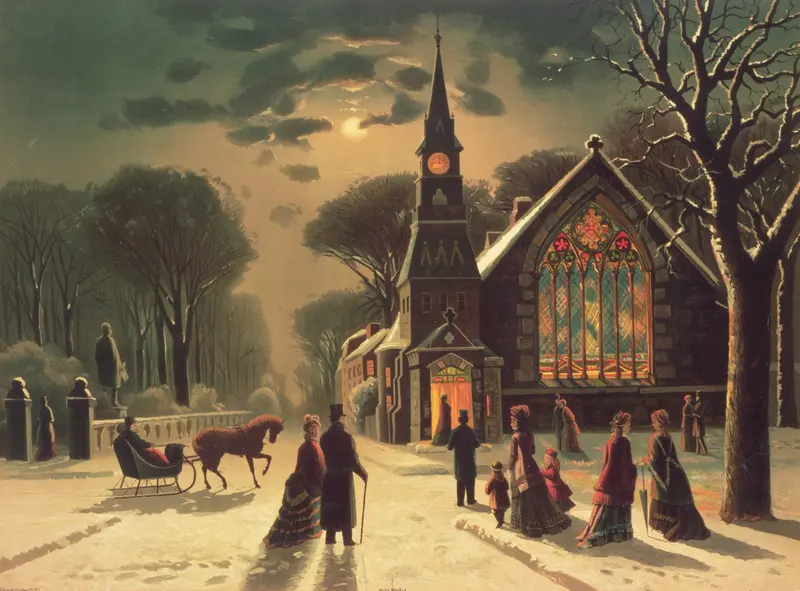
Photo: J. Hoover & Son, Public domain
- 25 Dec Every year Christmas DayChristmas Day is the festival when Christians around the world celebrate the birth of Jesus. The Gospels of Matthew and Luke in the Bible say Jesus w…
- 26 Dec Every year Boxing DayBoxing Day is a holiday on 26 December, the day after Christmas Day. It began in the United Kingdom and is also celebrated in several Commonwealth co…
- 27 Dec Every year Twelve Days of ChristmasThe Twelve Days of Christmas are a Christian festive season, running from Christmas Day to Twelfth Night on the evening of 5 January. 27 December, th…
-
31 Dec
Every year Hogmanay and New Year's EveHogmanay is the Scots word for the last day of the year and for welcoming the New Year in the Scottish way. Celebrations often carry on into New Year…
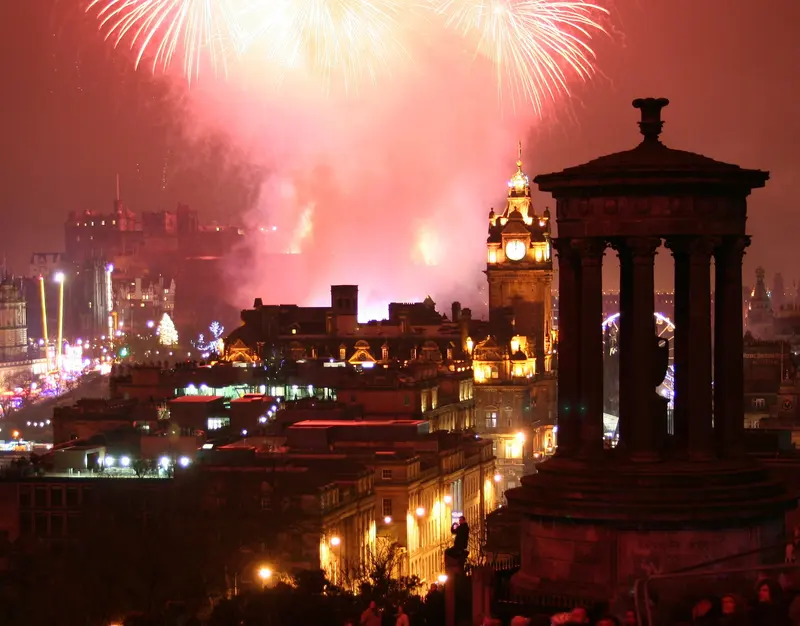
Photo: Robbie Shade, CC BY 2.0
- 1 Jan Every year New Year's DayNew Year's Day is the first day of the year in the Gregorian calendar. It is one of the most celebrated public holidays in the world, often welcomed …
- 2 Jan Every year Bank holiday (Scotland)In Scotland, 2 January is a bank holiday as well as New Year's Day, so many people get two days off to start the year. The extra holiday is given eac…
- 4 Jan Every year World Braille DayWorld Braille Day celebrates braille, a writing system that blind and visually impaired people read by touch. Braille can be read on embossed paper o…
-
5 Jan
Every year Twelfth NightTwelfth Night is the last night of the Twelve Days of Christmas and marks the end of the Christmas season. Some traditions hold it on 5 January and o…
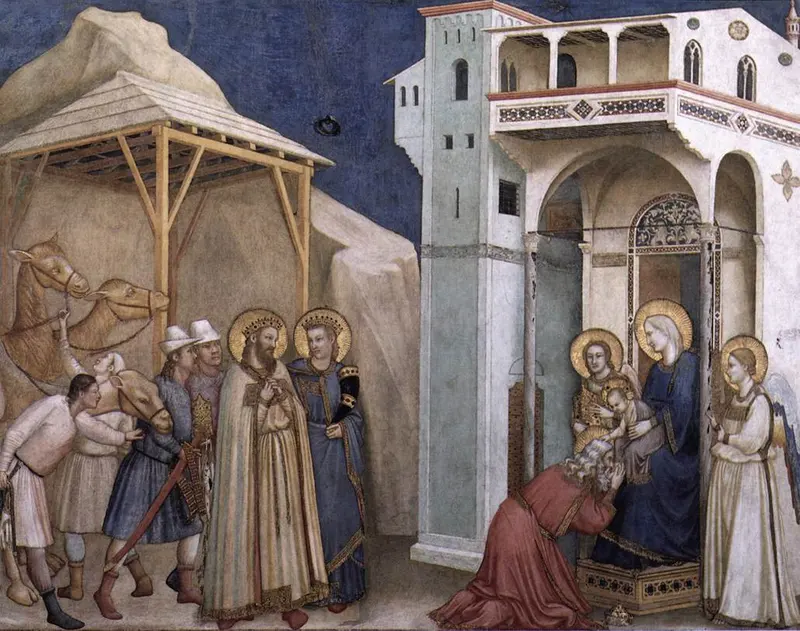
Photo: Giotto, Public domain
- 11 Jan Every year Kagami birakiKagami biraki, meaning 'opening the mirror', is a traditional Japanese ceremony usually held on 11 January. At New Year, many families display kagami…
- 13 Jan Every year LohriLohri is a winter folk and harvest festival celebrated mainly in the Punjab region of India and Pakistan. It usually falls on 13 or 14 January and ce…
- 14 Jan Every year Makar SankrantiMakar Sankranti is a Hindu mid-winter harvest festival in India and Nepal, usually held on 14 January. It marks the Sun's journey northwards after th…
Try this
- Calendar detective. If the year still changed on 25 March, would your birthday be near the start of the year or the end?
- How long ago? Take 1600 away from this year. How long has Scotland started the year on 1 January?
- Time capsule. Write three things you hope to learn next year and open them next New Year's Eve.
You can see every story from the month on our January page and December page.
Where our facts come from
Every story in this post comes from our calendar's day pages, which credit the Wikipedia articles they are based on. We checked the main dates against those articles on 23 November 2026.