A Day in the Past

On this day: 25 December

148 things happened on 25 December, from AD 274 to 2024. UK stories come first, then the rest of the world.

Printable worksheet Take the quiz

Did you know?

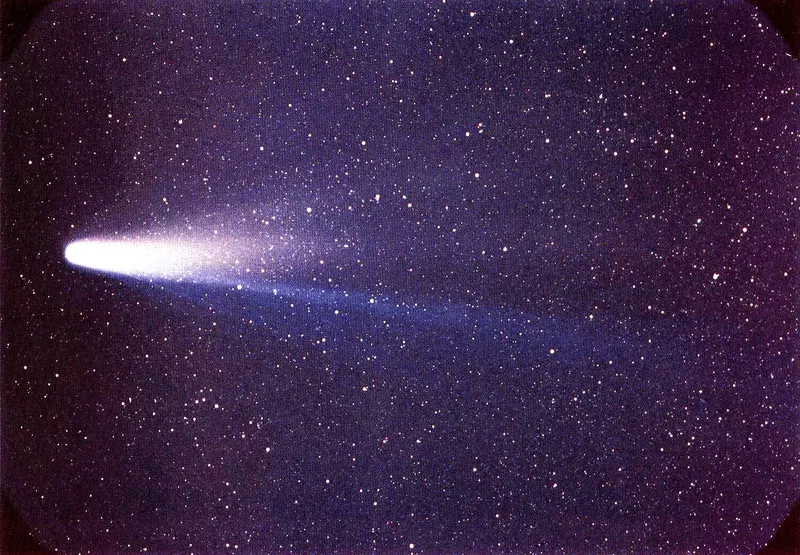
A bright comet with a long glowing white and blue tail streaking across a starry purple sky
Photo: NASA/W. Liller, Public domain

1758 · 268 years ago

Halley's Comet returns, just as Edmond Halley predicted

German astronomer Johann Georg Palitzsch spotted a comet in the sky on Christmas Day. Its return had been predicted in 1705 by the English astronomer Edmond Halley, who realised the same comet kept coming back. Halley had died before his prediction came true,…
In the UK 10

UK history first: stories from England, Scotland, Wales and Northern Ireland.

AD 597 1,429 years ago

UK story

Augustine baptises thousands of people in Kent at Christmas

Augustine, who became the first Archbishop of Canterbury, baptised thousands of people in the Anglo-Saxon Kingdom of Kent on Christmas Day. Baptism is a Christian ceremony that welcomes someone into the Church. Kent's King Æthelberht had already let these missionaries from Rome preach freely. Pope Gregory I, who had sent them, later claimed that more than 10,000 people were baptised, though the number may be exaggerated.

1013 1,013 years ago

UK story

Viking leader Sweyn Forkbeard is proclaimed King of England

Sweyn Forkbeard, King of Denmark, took control of the Danelaw and was proclaimed King of England. The Danelaw was the part of eastern and northern England where Danish laws applied, after Danish Vikings had settled there. Sweyn ruled England only briefly, as he died in 1014. His son Cnut later became King of England too.

1066 960 years ago

UK story

William the Conqueror is crowned King of England

William, Duke of Normandy, was crowned King of England at Westminster Abbey on Christmas Day. Earlier that year he had defeated the Anglo-Saxon army of King Harold Godwinson at the Battle of Hastings. William became the first Norman king of England. However, he faced rebellions for several years and was not secure on the throne until after 1072.

1758 268 years ago

UK story

Halley's Comet returns, just as Edmond Halley predicted

German astronomer Johann Georg Palitzsch spotted a comet in the sky on Christmas Day. Its return had been predicted in 1705 by the English astronomer Edmond Halley, who realised the same comet kept coming back. Halley had died before his prediction came true, but the comet was later named Halley's Comet after him.

A bright comet with a long glowing white and blue tail streaking across a starry purple sky
Halley's Comet photographed on 8 March 1986 from Easter Island (NASA/W. Liller) Photo: NASA/W. Liller, Public domain
1990 36 years ago

UK story

Tim Berners-Lee finishes WorldWideWeb, the first web browser

By Christmas Day, the British computer scientist Tim Berners-Lee had finished the first version of WorldWideWeb, the first web browser. A web browser is a program for viewing pages on the World Wide Web, which Berners-Lee also invented. He wrote it in about two months on a NeXT computer while working at CERN, a European research centre. The browser became available to the public in August 1991.

2003 23 years ago

UK story

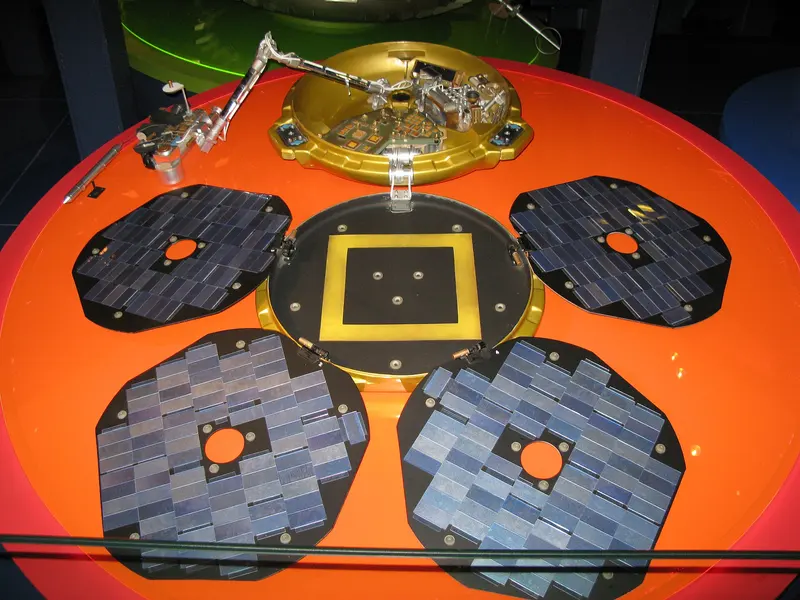
Britain's Beagle 2 lander arrives at Mars on Christmas Day

Beagle 2, a British lander carried to Mars by the European Space Agency's Mars Express mission, was due to land on Christmas Day. Named after Charles Darwin's ship HMS Beagle, it was designed to look for signs of past life on Mars. No signal ever came back. In 2015, pictures from a NASA spacecraft showed it had landed safely, but some solar panels had not opened, blocking its antenna.

A model of a small Mars lander opened up like a flower, with round solar panels spread out on an orange display table
A replica of the Beagle 2 Mars lander in the Science Museum, London Photo: user:geni, CC BY-SA 4.0

Around the world 41

AD 800 1,226 years ago

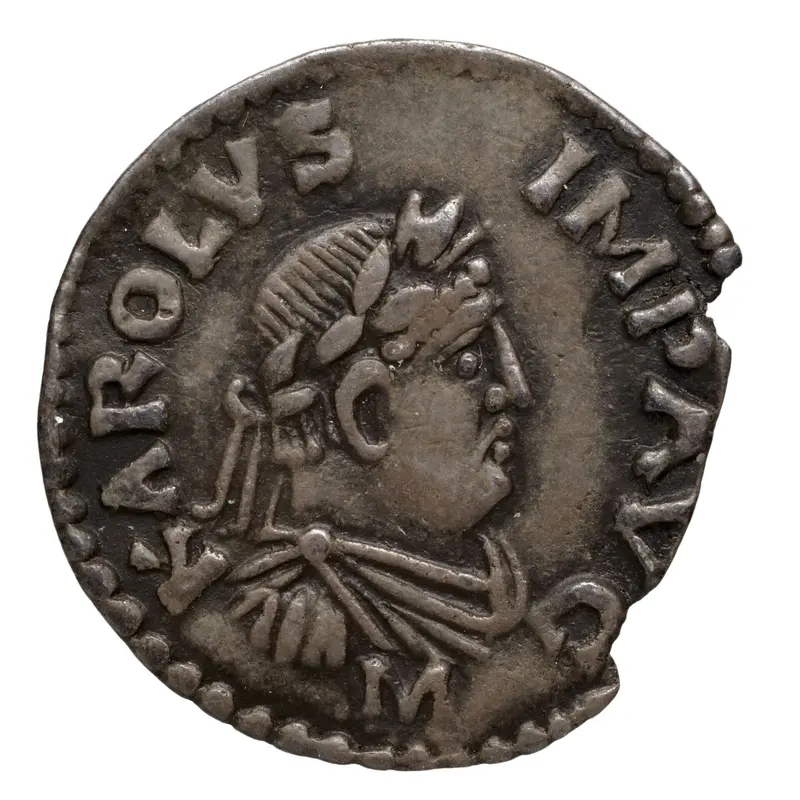
Charlemagne is crowned emperor in Rome

Charlemagne, King of the Franks, was crowned emperor in Rome on Christmas Day. He had united most of Western and Central Europe under his rule. He was the first recognised emperor in the west since the fall of the Western Roman Empire about three centuries earlier. The changes made during his reign influenced Europe throughout the Middle Ages.

An old silver coin showing the head of Charlemagne wearing a wreath, with Latin letters around the edge
A silver denier coin of Charlemagne, made at Mainz around 812–814 Photo: Charlemagne. Autorité émettrice de monnaie indéterminé. Atelier monétaire. Émetteur, Public domain
1991 35 years ago

Mikhail Gorbachev resigns as leader of the Soviet Union

In a speech shown on television across the country, Mikhail Gorbachev resigned as President of the Soviet Union. He had led the country since 1985 and was its last leader. The Soviet Union was a huge communist country made up of Russia and other republics. The next day, it was formally dissolved, which means it officially stopped existing.

2021 5 years ago

The James Webb Space Telescope is launched

The James Webb Space Telescope was launched into space on an Ariane 5 rocket. It is the largest telescope in space and studies infrared light, which our eyes cannot see. It can spot objects too old, distant or faint for the Hubble Space Telescope, helping scientists study the first stars and galaxies. It was built by NASA with the European and Canadian space agencies.

1000 1,026 years ago

The foundation of the Kingdom of Hungary: Hungary is established as a Christian kingdom by Stephen I of Hungary.

1913 113 years ago

Disfellowshipped Adventist lay preacher Felix Manalo begins the new religious movement known as the Iglesia ni Cristo with the baptism of its first members.

1941 85 years ago

Admiral Émile Muselier seizes the archipelago of Saint Pierre and Miquelon, which become the first part of France to be liberated by the Free French Forces.

Quick quiz

Every answer is somewhere on this page. Have a go, then check!

  1. In which year did this happen: “Tim Berners-Lee finishes WorldWideWeb, the first web browser”?

    1. 1776
    2. 1013
    3. 1990
    Show the answer

    C: 1990. 1990 — that’s 36 years ago. Find it on the page

  2. In which year did this happen: “Halley's Comet returns, just as Edmond Halley predicted”?

    1. 1046
    2. 1758
    3. 1013
    Show the answer

    B: 1758. 1758 — that’s 268 years ago. Find it on the page

  3. Which of these happened first?

    1. Halley's Comet returns, just as Edmond Halley predicted
    2. Tim Berners-Lee finishes WorldWideWeb, the first web browser
    3. William the Conqueror is crowned King of England
    Show the answer

    C: William the Conqueror is crowned King of England. 1758: Halley's Comet returns, just as Edmond Halley predicted · 1990: Tim Berners-Lee finishes WorldWideWeb, the first web browser · 1066: William the Conqueror is crowned King of England Find it on the page

  4. “William the Conqueror is crowned King of England” happened in 1066. How many years ago was that?

    1. 950 years
    2. 960 years
    3. 970 years
    Show the answer

    B: 960 years. 2026 − 1066 = 960. Find it on the page

Born on this day 40

Famous people whose birthday is 25 December.

Remembering 22

Well-known people who died on 25 December.

Special days 8

Festivals, holidays and saints’ days celebrated on 25 December somewhere in the world.

For older readers 27 Show stories about war, disasters, crime and other difficult history

Content note: these entries mention things like war, violence, deaths, disasters or crime. They are part of history, but they can be upsetting. Grown-ups and teachers: you may want to read them first. They come straight from Wikipedia and have not been rewritten for children.

Where these facts come from

Stories with a heading have been written for young readers by A Day in the Past, using the linked articles as sources. Other entries show text from Wikipedia’s “December 25” page and its “On this day” feed, written by Wikipedia contributors and shared under the Creative Commons Attribution-ShareAlike 4.0 licence. Each “Read more” link goes to the article an entry is based on. Photos are credited under each picture. Spotted a mistake? Please tell us.