When the weather turns cold, it's fun to imagine what winter was like long ago. Some winters in the past were so cold that rivers froze over, and people held fairs on the ice. Here are some true wintry stories from our calendar, perfect for a frosty morning.
A fair on the frozen Thames
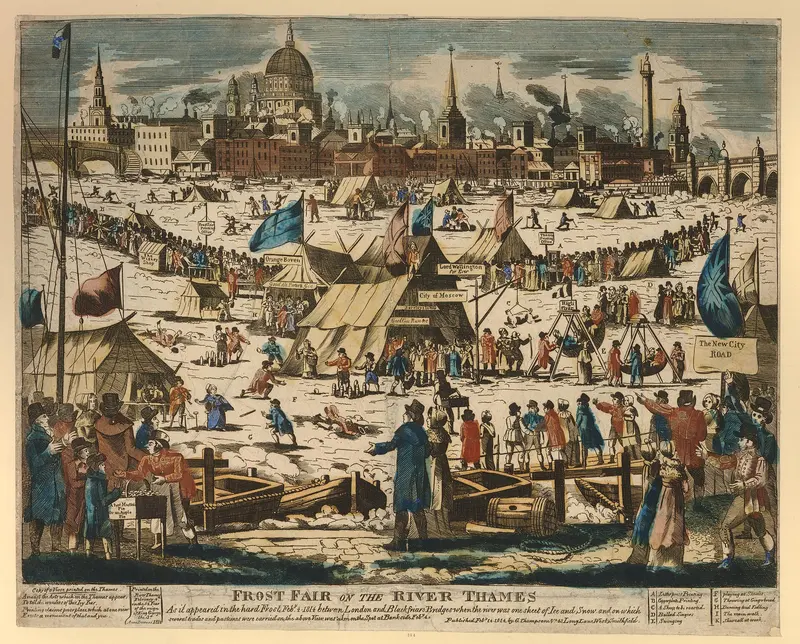
In very cold winters, the River Thames in London used to freeze over, and Londoners held 'frost fairs' on the ice.
The last ever frost fair began on 1 February 1814 and lasted four days. Traders sold gingerbread, hot apples and hot chocolate, while people danced and played nine-pin bowling. An elephant was even led across the ice. You can read about it on our 2 February page.
Why don't frost fairs happen any more? After 1814 the river became less likely to freeze, as the climate grew milder and old London Bridge was replaced.
Skating with the king
Long before that, on 1 December 1662, the writer John Evelyn recorded people skating on the frozen lake in St James's Park, London. King Charles II and Queen Catherine were there watching. Evelyn kept a famous diary, which is why we know about it.
The Devil's Footprints
On 9 February 1855, after heavy snow in Devon, people woke up to find trails of strange hoof-like marks in the snow. The tracks had appeared overnight around the Exe Estuary and stretched for somewhere between 40 and 100 miles altogether. Some people said they were the footprints of the Devil, which is how they got their name. Many theories have tried to explain them, and some people have questioned parts of the story. What do you think made them?
The first photo of a snowflake
On 15 January 1885, a 19-year-old called Wilson Bentley, from a farm in Vermont in the USA, took the first known photograph of a snowflake. After lots of experimenting, he attached a camera to a microscope. He caught snowflakes on black velvet so he could photograph them before they melted. People nicknamed him 'Snowflake Bentley', and he helped spread the idea that no two snowflakes are exactly alike.
Flying off the ice
On 23 February 1909, an aeroplane called the Silver Dart took off from a frozen bay in Nova Scotia, Canada. It made the first powered flight in Canada and the British Empire. Our history of flight post has more flying firsts.
Winter sports begin
On 25 January 1924, the first Winter Olympic Games opened in Chamonix, in the French Alps. At the time it was called 'International Winter Sports Week'.
A snowy story
Raymond Briggs, born on 18 January 1934, is best known for The Snowman, a picture book with no words, published in 1978. Its cartoon version is shown on television every Christmas.
Even colder: Antarctica
If you think a British winter is chilly, try the South Pole. Our race to the South Pole post tells the story of the explorers who reached the bottom of the world.
More wintry stories
Here are the wintry stories in this post, and a few more, from our calendar, oldest first:
- 1 Dec 1662 John Evelyn writes about skating in St James's ParkThe diarist John Evelyn recorded skating on the frozen lake in St James's Park, London. King Charles II and Queen Catherine were there watching. Evel…
- 2 Feb 1814 London's last frost fair is held on the frozen River ThamesThe last ever frost fair was held on the frozen River Thames in London. It began on 1 February and lasted four days, and an elephant was even led acr…
-
9 Feb
1855 Mysterious 'Devil's Footprints' appear in the snow in DevonAfter a heavy snowfall in Devon, people discovered trails of strange hoof-like marks in the snow. The tracks had appeared overnight around the Exe Es…
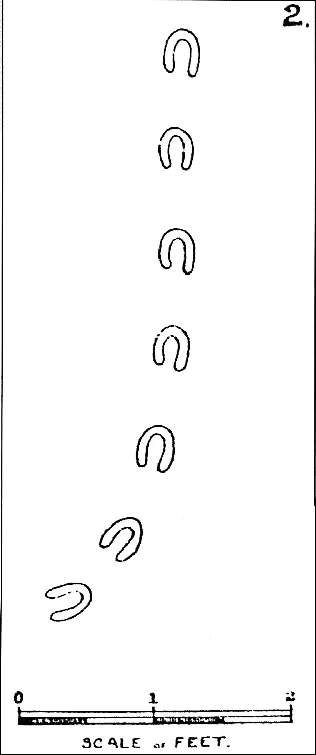
Photo: English Papers 1855, Public domain
- 29 Dec 1860 HMS Warrior, the first iron-hulled armoured warship, is launchedHMS Warrior was launched for the Royal Navy during the coldest winter for 50 years. She and her sister ship, HMS Black Prince, were the first warship…
- 15 Jan 1885 Wilson Bentley takes the first known photo of a snowflakeWilson Bentley, a 19-year-old from a farm in Jericho, Vermont, in the USA, took the first known photograph of a snowflake. After much experimenting, …
- 30 Dec 1896 Ernie McLea scores the first hat-trick in Stanley Cup historyCanadian ice hockey player Ernie McLea scored the first hat-trick in Stanley Cup play, which means three goals in one game. He also scored the winnin…
- 23 Feb 1909 The Silver Dart makes Canada's first powered flightThe Silver Dart aeroplane took off from the frozen Baddeck Bay in Nova Scotia, Canada. Flown by one of its designers, Douglas McCurdy, it made the fi…
-
25 Jan
1924 The first Winter Olympic Games open in ChamonixThe first Winter Olympic Games opened in Chamonix, in the French Alps. The competitions ran until 5 February. At the time the event was called 'Inter…
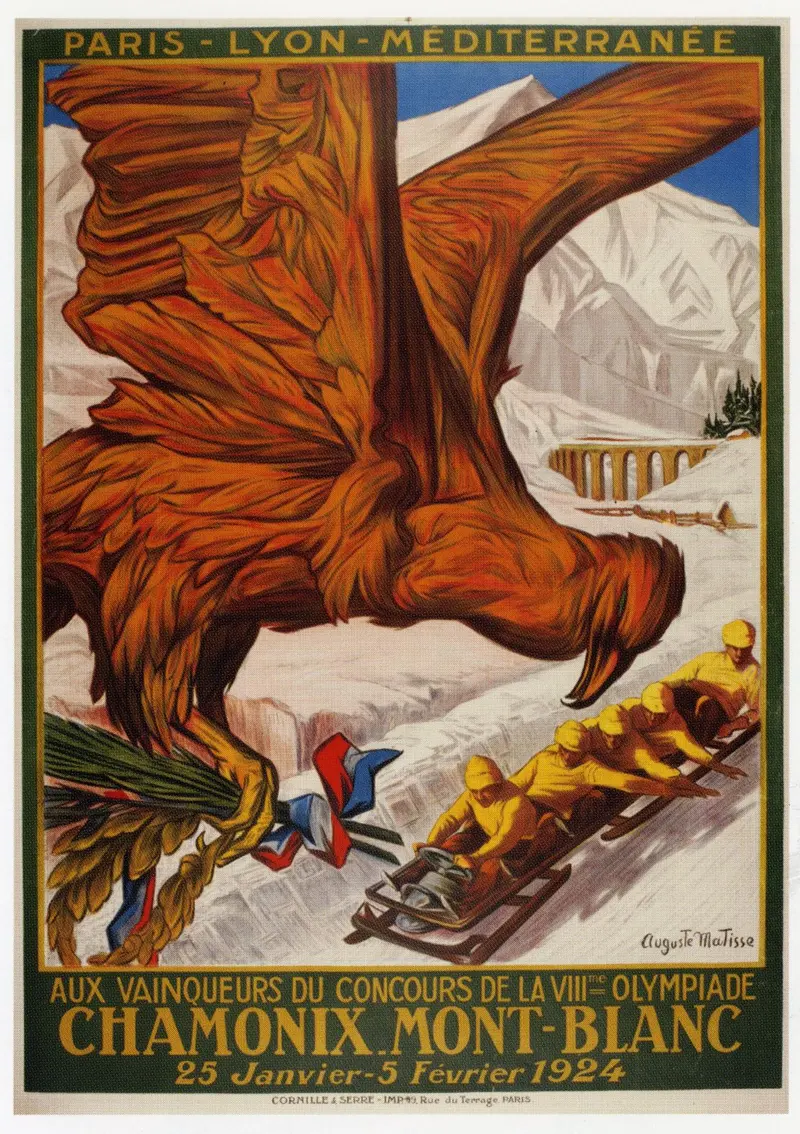
Photo: Auguste Matisse, Public domain
-
18 Jan
1934 Born: Raymond BriggsRaymond Briggs was an English author and illustrator, loved by children and adults alike. He is best known for The Snowman, a picture book with no wo…
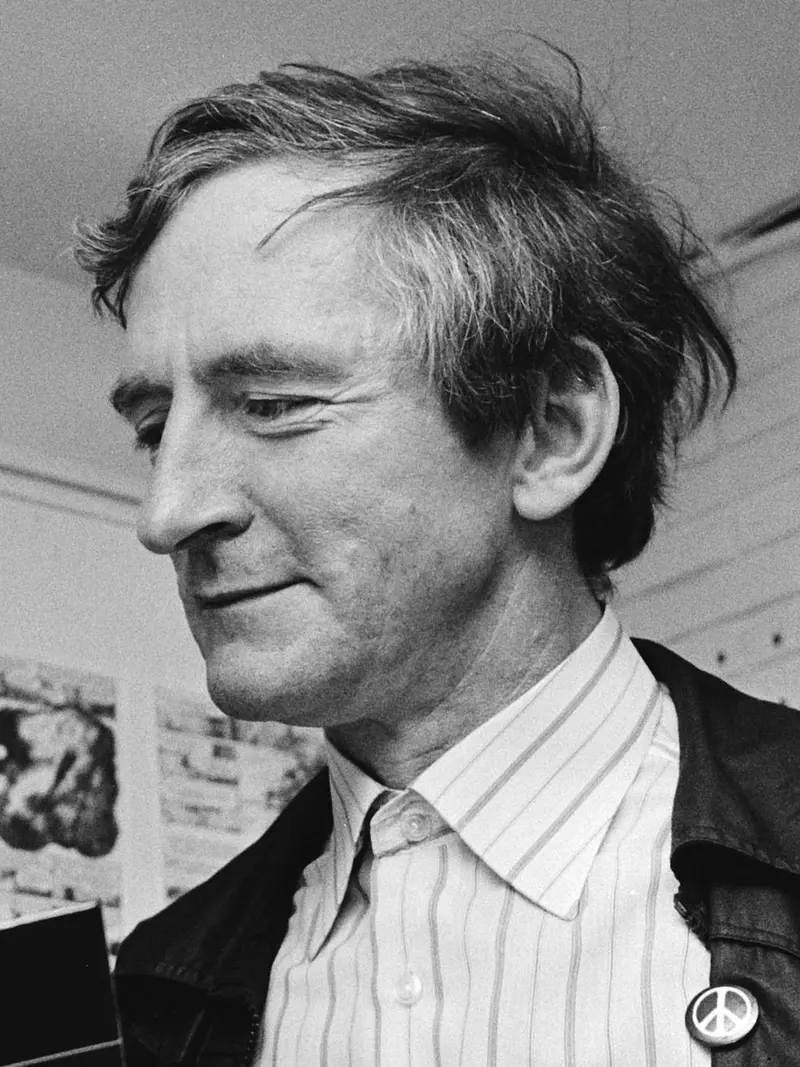
Photo: Rob Croes for Anefo, CC0
-
17 Feb
1980 Two Polish climbers make the first winter climb of Mount EverestPolish climbers Krzysztof Wielicki and Leszek Cichy became the first people to reach the top of Mount Everest in winter. Everest, on the border betwe…
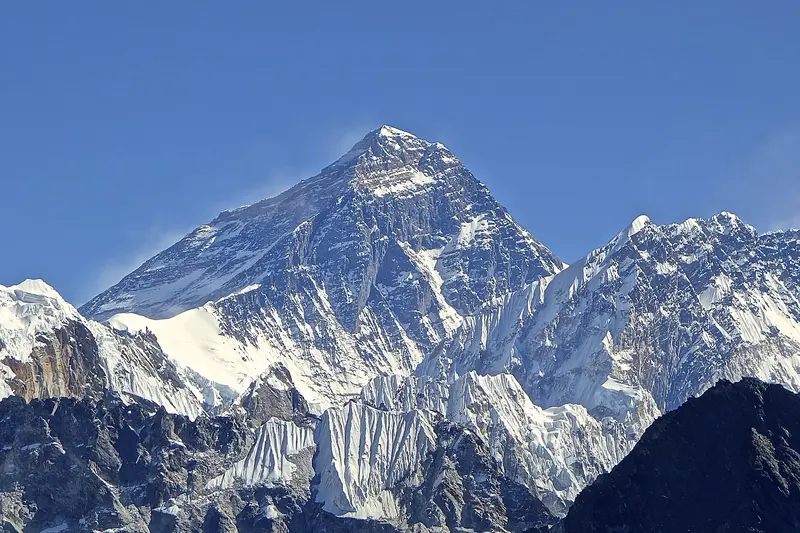
Photo: Rdevany, CC BY-SA 3.0
Try this
- Frost fair stall. Plan your own frost fair stall. What would you sell to keep people warm?
- Snowflake shapes. Fold and cut paper snowflakes. Are any two exactly the same?
- Footprint mystery. Write your own explanation for the Devil's Footprints, then compare ideas with a friend.
You can also explore the whole season on our December, January and February pages, or look at our nature stories.
Where our facts come from
Every story in this post comes from our calendar's day pages, which credit the Wikipedia articles they are based on. We checked the main dates against those articles on 23 November 2026.