A Day in the Past

On this day: 11 November

150 things happened on 11 November, from AD 308 to 2024. UK stories come first, then the rest of the world.

Printable worksheet Take the quiz

Did you know?

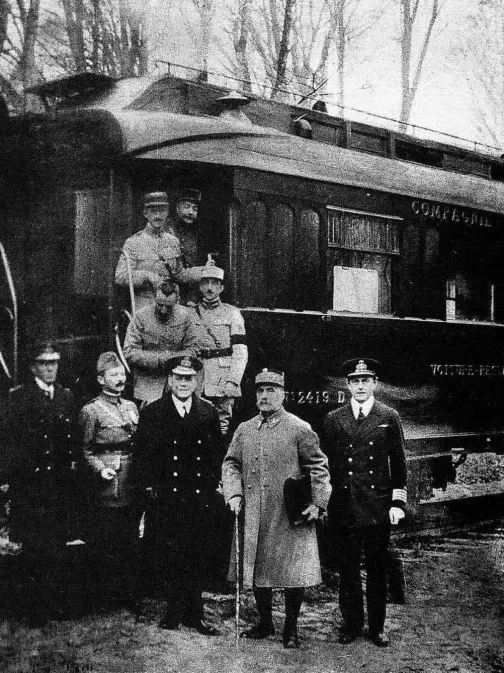
Old black-and-white photo of military officers in greatcoats standing beside a railway carriage in a forest
Photo: Unknown author, Public domain

1918 · 108 years ago

The Armistice ends the fighting of the First World War

Early in the morning, Germany and the Allies, including Britain, signed an armistice in a railway carriage in a forest near Compiègne, in France. An armistice is an agreement to stop fighting. The fighting on land, at sea and in the air ended at 11 o'clock: t…
In the UK 11

UK history first: stories from England, Scotland, Wales and Northern Ireland.

1918 108 years ago

UK story

The Armistice ends the fighting of the First World War

Early in the morning, Germany and the Allies, including Britain, signed an armistice in a railway carriage in a forest near Compiègne, in France. An armistice is an agreement to stop fighting. The fighting on land, at sea and in the air ended at 11 o'clock: the 11th hour of the 11th day of the 11th month. Every year on Remembrance Day, people in the UK keep a two-minute silence at 11 am to remember those who served and lost their lives in wars.

Old black-and-white photo of military officers in greatcoats standing beside a railway carriage in a forest
Officers outside the railway carriage in the forest of Compiègne, after the armistice that ended the First World War was agreed Photo: Unknown author, Public domain
1100 926 years ago

UK story

King Henry I marries Matilda of Scotland

King Henry I of England, the fourth son of William the Conqueror, married Matilda, daughter of King Malcolm III of Scotland. She was crowned queen on the same day. Matilda was descended from England's old Anglo-Saxon royal family, which helped Henry's claim to the throne. Remembered as 'Good Queen Maud', she ruled the country for Henry several times while he was away, and every later English and British monarch is descended from her.

1920 106 years ago

UK story

The Cenotaph is unveiled and the Unknown Warrior is laid to rest

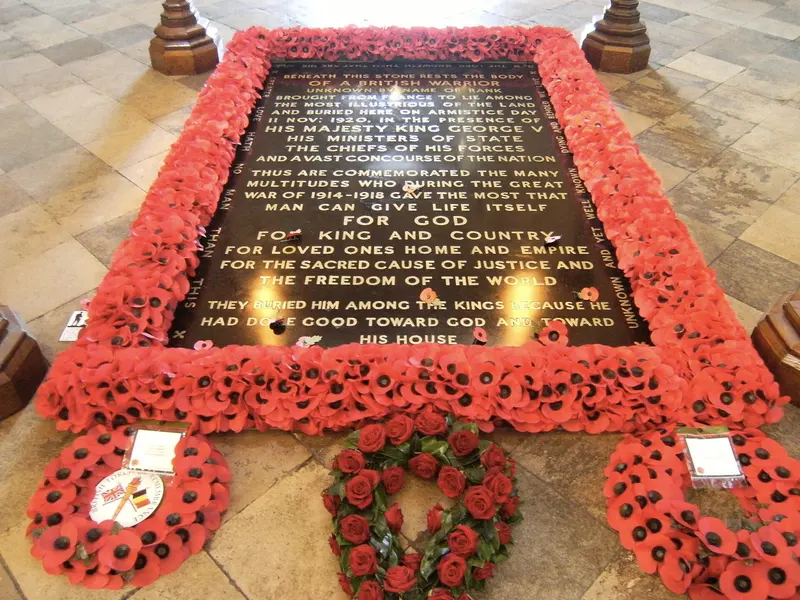
The Cenotaph, designed by Sir Edwin Lutyens, was unveiled on Whitehall in London as the UK's national memorial to those from Britain and its empire who died in the First World War. The word cenotaph comes from Greek and means 'empty tomb'. On the same day, the Unknown Warrior, a British serviceman whose name is not known, was buried in Westminster Abbey. In 1946 the Cenotaph was rededicated to remember those of the Second World War too.

A black stone slab with gold writing, set in the floor and surrounded by a border of red poppies and poppy wreaths
The grave of the Unknown Warrior in Westminster Abbey, edged with poppies in November 2010 Photo: Mike from England, CC BY-SA 2.0
1940 86 years ago

UK story

The Royal Navy makes the first all-aircraft attack on a fleet

During the Second World War, the Royal Navy attacked the Italian fleet at Taranto in the Battle of Taranto. It was the first naval attack in history carried out only by aircraft flying from a ship against other ships. Twenty-one Fairey Swordfish biplanes took off from the aircraft carrier HMS Illustrious in the Mediterranean Sea. The raid took place over the night of 11 to 12 November.

1992 34 years ago

UK story

The Church of England votes to allow women to become priests

The General Synod of the Church of England voted to allow women to become priests. Until then, only men could be priests in the Church of England. The General Synod is the church's governing body, a bit like its own parliament, which makes decisions about the church's rules. It was set up in 1970.

1999 27 years ago

UK story

A new law removes most hereditary peers from the House of Lords

The House of Lords Act received royal assent, the monarch's formal approval, and became law. For centuries, several hundred members of the House of Lords had inherited their seats from their families. The new law took away that right, although 92 of these hereditary peers were allowed to stay until further changes were made. The House of Lords is one of the chambers of the UK Parliament.

1813 213 years ago

UK story

War of 1812: British–Canadian forces repelled an American attack at the Battle of Crysler's Farm, forcing the United States to give up their attempt to capture Montreal.

Around the world 33

1572 454 years ago

Tycho Brahe spots a bright new star in the sky

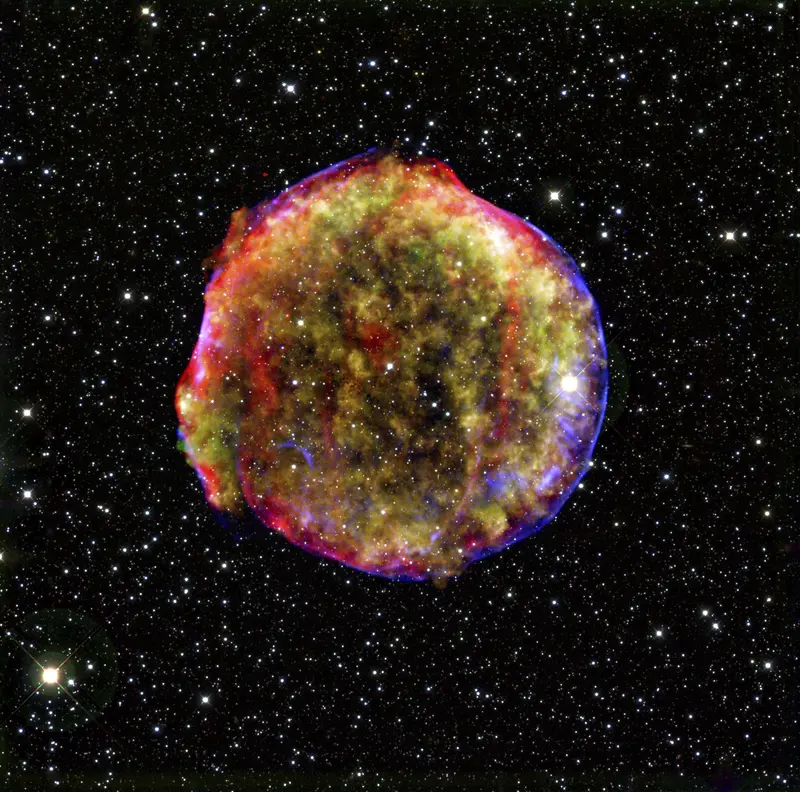
Danish astronomer Tycho Brahe saw a bright new star in the constellation Cassiopeia. It was really a supernova, the huge explosion of a star, and it is now called Tycho's Star. It is one of only eight supernovae in historical records that could be seen without a telescope. Tycho's very accurate measurements of the sky helped turn astronomy into a modern science.

A glowing round cloud of red, yellow and blue gas surrounded by many stars in black space
The remains of Tycho's supernova, in a picture combining X-ray, infrared and visible-light observations (NASA) Photo: X-ray: NASA/CXC/SAO, Infrared: NASA/JPL-Caltech; Optical: MPIA, Calar Alto, O.Krause et al, Public domain
1620 406 years ago

Settlers on the Mayflower sign the Mayflower Compact

Men on board the Mayflower, anchored near Cape Cod in North America, signed an agreement now known as the Mayflower Compact. It was the first set of rules for governing their new settlement, Plymouth Colony. The agreement included a promise of loyalty to King James I. Many of the settlers were Puritans who were unhappy with the Church of England.

1675 351 years ago

Gottfried Leibniz uses integral calculus for the first time

German mathematician Gottfried Leibniz used integral calculus for the first time, to work out the area under a curve on a graph. Integration, as it is called, helps people calculate areas and volumes, and it is now used in many kinds of science. Leibniz and Isaac Newton are both credited with inventing calculus. Leibniz also worked on binary arithmetic, the counting system of 0s and 1s.

1930 96 years ago

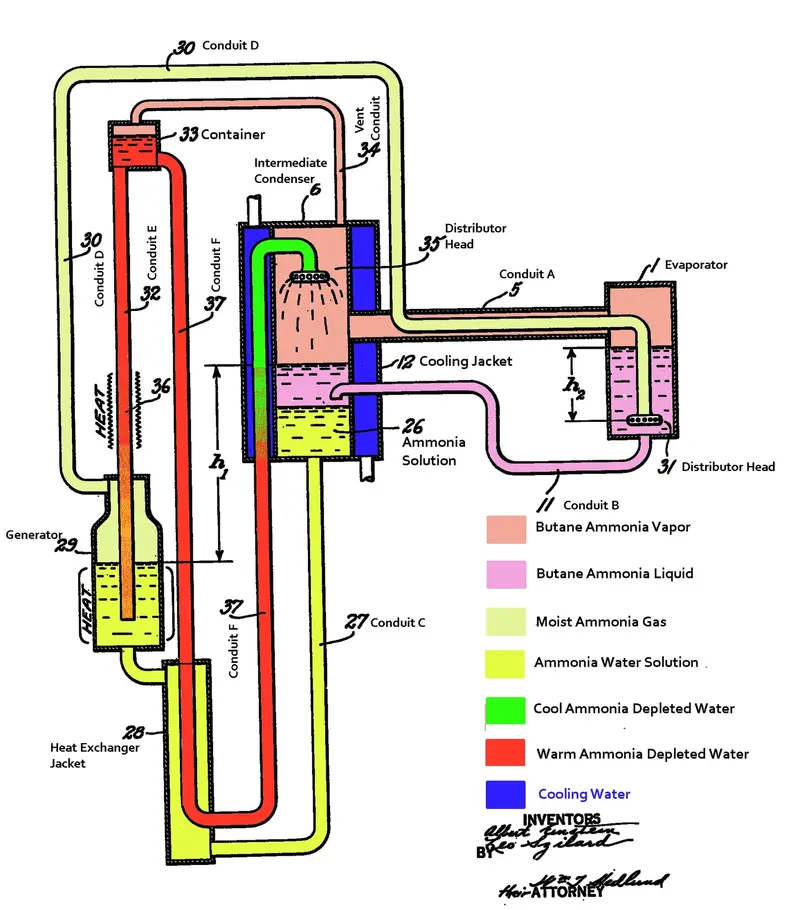
Albert Einstein gets a patent for his refrigerator

Albert Einstein and his former student Leó Szilárd were granted a US patent for the Einstein refrigerator, which they had invented together. It had no moving parts and needed only a source of heat to work. A patent is a legal right that stops other people copying an invention for a set time. Einstein is best known for his theory of relativity and the famous equation E = mc².

A colourful diagram of pipes and containers, with a key explaining what each colour means and signatures at the bottom
The patent drawing of Albert Einstein and Leo Szilard's refrigerator, with colours added to show how it works Photo: Einstein/Szilard with annotations by P. Brandon Malloy, Public domain
1966 60 years ago

Gemini 12 launches with Buzz Aldrin on board

NASA launched Gemini 12, the tenth and final crewed flight of Project Gemini. It was commanded by James Lovell. On his first trip into space, Buzz Aldrin made three spacewalks, lasting five and a half hours in total. The spacecraft also joined up, or docked, with an uncrewed target vehicle called Agena while in orbit.

1982 44 years ago

Space Shuttle Columbia flies the first working shuttle mission

Space Shuttle Columbia launched from the Kennedy Space Center in Florida on mission STS-5. It was the first mission to be officially called 'operational', after four earlier test flights. It was also the first shuttle mission to release communications satellites into orbit. Columbia, the first Space Shuttle to fly in space, landed five days later.

1750 276 years ago

The F.H.C. Society, also known as the Flat Hat Club, is formed at Raleigh Tavern, Williamsburg, Virginia. It is the first college fraternity.

2002 24 years ago

Russian mathematician Grigori Perelman posts the first of three preprint texts with his proof of the Poincaré conjecture. It remains the only of the Millennium Prize Problems in mathematics to be solved. He later refused both the prize money from Clay Mathematics Institute as well as the Fields Medal for his work.

Quick quiz

Every answer is somewhere on this page. Have a go, then check!

  1. In which year did this happen: “The Armistice ends the fighting of the First World War”?

    1. 1620
    2. 1918
    3. 1999
    Show the answer

    B: 1918. 1918 — that’s 108 years ago. Find it on the page

  2. In which year did this happen: “The Royal Navy makes the first all-aircraft attack on a fleet”?

    1. 1999
    2. 1982
    3. 1940
    Show the answer

    C: 1940. 1940 — that’s 86 years ago. Find it on the page

  3. Which of these happened first?

    1. The Cenotaph is unveiled and the Unknown Warrior is laid to rest
    2. The Armistice ends the fighting of the First World War
    3. The Royal Navy makes the first all-aircraft attack on a fleet
    Show the answer

    B: The Armistice ends the fighting of the First World War. 1920: The Cenotaph is unveiled and the Unknown Warrior is laid to rest · 1918: The Armistice ends the fighting of the First World War · 1940: The Royal Navy makes the first all-aircraft attack on a fleet Find it on the page

  4. “The Cenotaph is unveiled and the Unknown Warrior is laid to rest” happened in 1920. How many years ago was that?

    1. 96 years
    2. 106 years
    3. 116 years
    Show the answer

    B: 106 years. 2026 − 1920 = 106. Find it on the page

Born on this day 40

Famous people whose birthday is 11 November.

Remembering 16

Well-known people who died on 11 November.

Special days 19

Festivals, holidays and saints’ days celebrated on 11 November somewhere in the world.

For older readers 31 Show stories about war, disasters, crime and other difficult history

Content note: these entries mention things like war, violence, deaths, disasters or crime. They are part of history, but they can be upsetting. Grown-ups and teachers: you may want to read them first. They come straight from Wikipedia and have not been rewritten for children.

Where these facts come from

Stories with a heading have been written for young readers by A Day in the Past, using the linked articles as sources. Other entries show text from Wikipedia’s “November 11” page and its “On this day” feed, written by Wikipedia contributors and shared under the Creative Commons Attribution-ShareAlike 4.0 licence. Each “Read more” link goes to the article an entry is based on. Photos are credited under each picture. Spotted a mistake? Please tell us.