A Day in the Past

On this day: 10 January

112 things happened on 10 January, from 49 BC to 2023. UK stories come first, then the rest of the world.

Printable worksheet Take the quiz

Did you know?

In the UK 5

UK history first: stories from England, Scotland, Wales and Northern Ireland.

1863 163 years ago

UK story

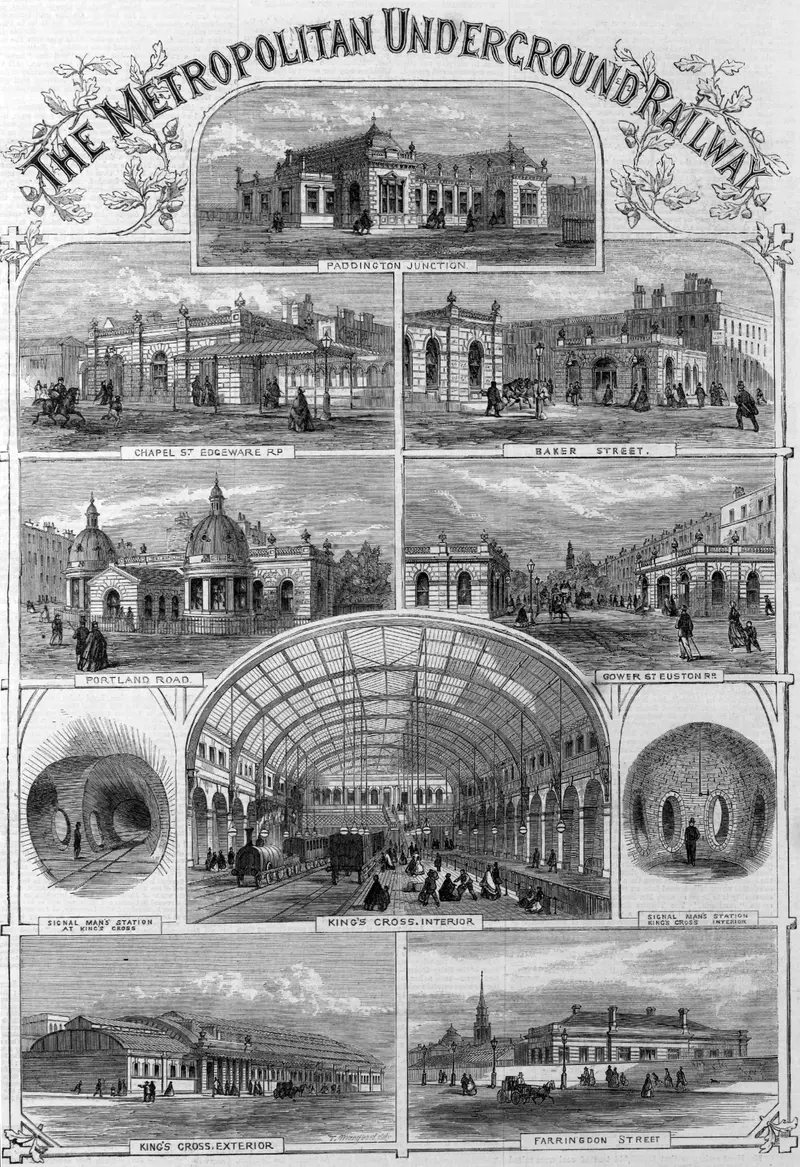
The world's first underground railway opens in London

The Metropolitan Railway opened to the public between Paddington and Farringdon Street in London. It was the world's first underground railway for passengers. Its gas-lit wooden carriages were pulled by steam locomotives. The line is the oldest part of the London Underground, which now has 11 lines and 272 stations.

Old printed page of small engravings showing the stations and tunnels of the Metropolitan Underground Railway
A Victorian print of the stations of the Metropolitan Underground Railway Photo: Unknown (illegible), Public domain
1917 109 years ago

UK story

The Ross Sea party is rescued in Antarctica

Seven men of the Ross Sea party were rescued after being stranded in Antarctica for several months. They were part of Ernest Shackleton's Imperial Trans-Antarctic Expedition, which hoped to make the first land crossing of Antarctica. Their job was to leave stores of supplies, called depots, for Shackleton's team. The crossing never happened, but the expedition is remembered as an epic feat of endurance.

1946 80 years ago

UK story

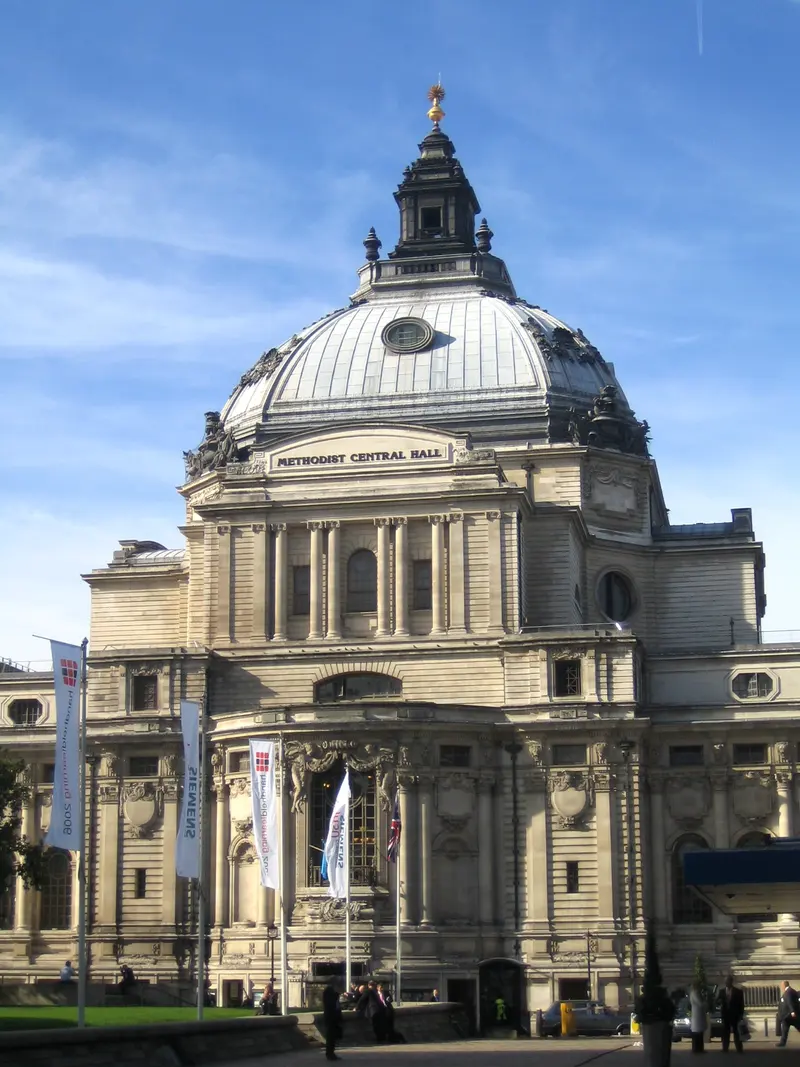
The first United Nations General Assembly meets in London

The first session of the United Nations General Assembly began at the Methodist Central Hall in Westminster, London. Representatives from 51 member countries took part. The General Assembly is the main meeting where UN members discuss world problems and make decisions together. Every member country has an equal voice, and there are now 193 members.

A large stone building with a grey dome and flags outside, under a blue sky
Methodist Central Hall in Westminster, London Photo: Gt-man, CC BY-SA 2.0 de
1985 41 years ago

UK story

Clive Sinclair launches the C5 electric tricycle

Inventor Sir Clive Sinclair unveiled the Sinclair C5, a small one-person tricycle powered by a battery and pedals. Its top speed was only 15 miles per hour, and its battery ran down quickly. It also had no protection from the weather, so few people bought it. Unsold C5s later became collector's items.

Side view of a small white three-wheeled electric vehicle with a low seat and a short windscreen
A Sinclair C5 electric tricycle Photo: Grant Mitchell, CC BY 2.0

Around the world 32

49 BC 2,074 years ago

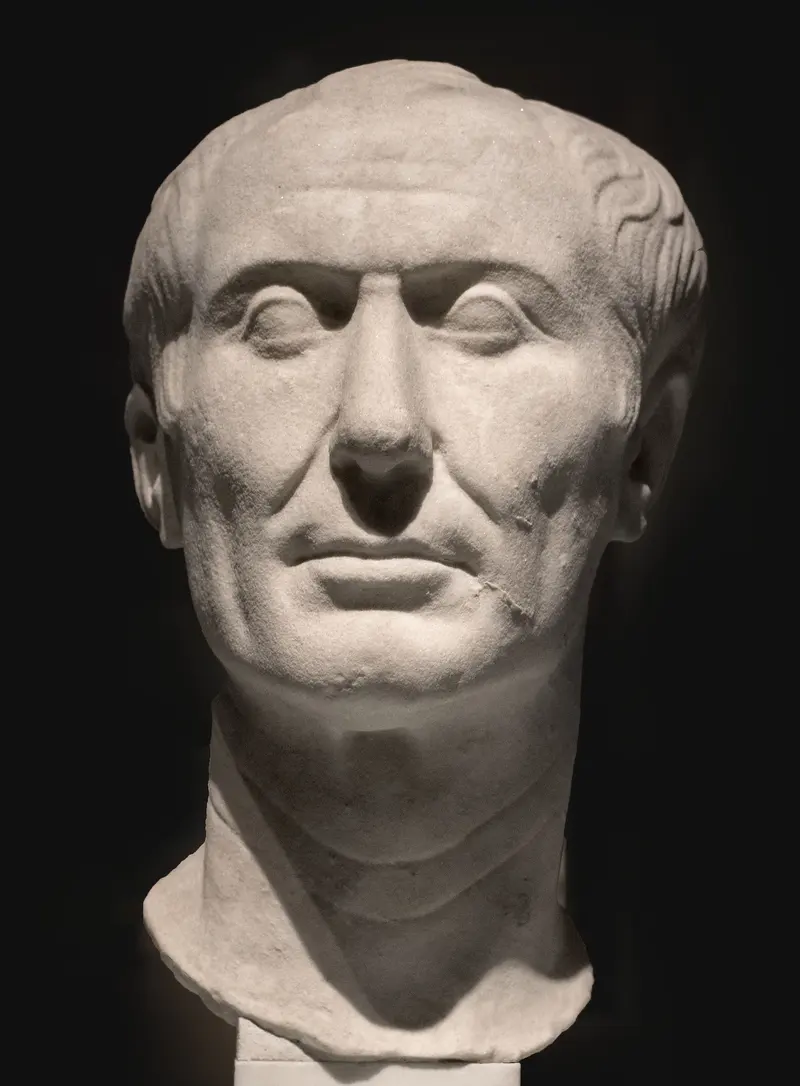
Julius Caesar crosses the Rubicon

Roman general Julius Caesar led his army across the Rubicon, a shallow river in northern Italy, probably on the night of 10 to 11 January. Roman law did not allow him to command an army inside Italy, so he was defying the Senate. It started a civil war, which ended with Caesar becoming dictator for life. 'Crossing the Rubicon' still means passing the point of no return.

A white marble bust of Julius Caesar's head against a black background
A marble portrait of Julius Caesar Photo: Ángel M. Felicísimo from Mérida, España, Public domain
1776 250 years ago

Thomas Paine publishes his pamphlet Common Sense

English-born writer Thomas Paine published Common Sense, a 47-page pamphlet, without his name on it. It argued that Britain's Thirteen Colonies in America should become independent. Written in clear and persuasive language, it became an immediate sensation. It helped inspire the colonists to declare independence later in 1776, and Paine is counted as one of America's Founding Fathers.

1812 214 years ago

The steamboat New Orleans completes its first voyage

The New Orleans, the first steamboat on the Mississippi River, arrived in the city of New Orleans at the end of its first voyage. It had travelled from Pittsburgh, Pennsylvania, along the Ohio and Mississippi rivers. The journey started a new era of steamboats carrying goods and people on America's great rivers. The Mississippi is the second-longest river in the United States.

1920 106 years ago

The Treaty of Versailles takes effect, ending the First World War

The Treaty of Versailles came into force, officially ending the First World War between Germany and most of the Allied Powers. The fighting had already stopped with the armistice of 11 November 1918. The treaty itself had been signed at the Palace of Versailles, in France, on 28 June 1919. The United States did not end its war through this treaty.

1929 97 years ago

Tintin's very first adventure begins in a newspaper

Tintin in the Land of the Soviets, the first Tintin story by the Belgian cartoonist Hergé, began appearing in a newspaper's children's section. It was printed in weekly parts until May 1930. The story follows the young reporter Tintin and his dog, Snowy, on a trip to the Soviet Union. The Adventures of Tintin grew to 24 books, published in more than 70 languages.

1946 80 years ago

Project Diana bounces radar signals off the Moon

The US Army Signal Corps sent radar signals to the Moon and picked up the echoes that bounced back. The experiment was called Project Diana, after the Roman goddess of the Moon. It was the first experiment in radar astronomy and the first active attempt to probe another body in space. It later inspired ways of sending radio messages by bouncing them off the Moon.

1984 42 years ago

Holy See–United States relations: The United States and Holy See (Vatican City) re-establish full diplomatic relations after almost 117 years, overturning the United States Congress's 1867 ban on public funding for such a diplomatic envoy.

Quick quiz

Every answer is somewhere on this page. Have a go, then check!

  1. In which year did this happen: “The first United Nations General Assembly meets in London”?

    1. 1812
    2. 1985
    3. 1946
    Show the answer

    C: 1946. 1946 — that’s 80 years ago. Find it on the page

  2. In which year did this happen: “Clive Sinclair launches the C5 electric tricycle”?

    1. 1863
    2. 1776
    3. 1985
    Show the answer

    C: 1985. 1985 — that’s 41 years ago. Find it on the page

  3. Which of these happened first?

    1. Clive Sinclair launches the C5 electric tricycle
    2. The first United Nations General Assembly meets in London
    3. The world's first underground railway opens in London
    Show the answer

    C: The world's first underground railway opens in London. 1985: Clive Sinclair launches the C5 electric tricycle · 1946: The first United Nations General Assembly meets in London · 1863: The world's first underground railway opens in London Find it on the page

  4. “The world's first underground railway opens in London” happened in 1863. How many years ago was that?

    1. 153 years
    2. 163 years
    3. 173 years
    Show the answer

    B: 163 years. 2026 − 1863 = 163. Find it on the page

Born on this day 31

Famous people whose birthday is 10 January.

Remembering 22

Well-known people who died on 10 January.

Special days 11

Festivals, holidays and saints’ days celebrated on 10 January somewhere in the world.

For older readers 11 Show stories about war, disasters, crime and other difficult history

Content note: these entries mention things like war, violence, deaths, disasters or crime. They are part of history, but they can be upsetting. Grown-ups and teachers: you may want to read them first. They come straight from Wikipedia and have not been rewritten for children.

Where these facts come from

Stories with a heading have been written for young readers by A Day in the Past, using the linked articles as sources. Other entries show text from Wikipedia’s “January 10” page and its “On this day” feed, written by Wikipedia contributors and shared under the Creative Commons Attribution-ShareAlike 4.0 licence. Each “Read more” link goes to the article an entry is based on. Photos are credited under each picture. Spotted a mistake? Please tell us.