A Day in the Past

On this day: 9 January

137 things happened on 9 January, from AD 400 to 2022. UK stories come first, then the rest of the world.

Printable worksheet Take the quiz

Did you know?

In the UK 11

UK history first: stories from England, Scotland, Wales and Northern Ireland.

1799 227 years ago

UK story

William Pitt the Younger introduces income tax

Prime Minister William Pitt the Younger introduced an income tax in Great Britain to help pay for the war against France. Income tax is money people pay to the government from what they earn. Pitt's tax was two shillings in every pound, which is one-tenth, because a shilling was one-twentieth of a pound. In 1801 Pitt became the first prime minister of the United Kingdom.

1806 220 years ago

UK story

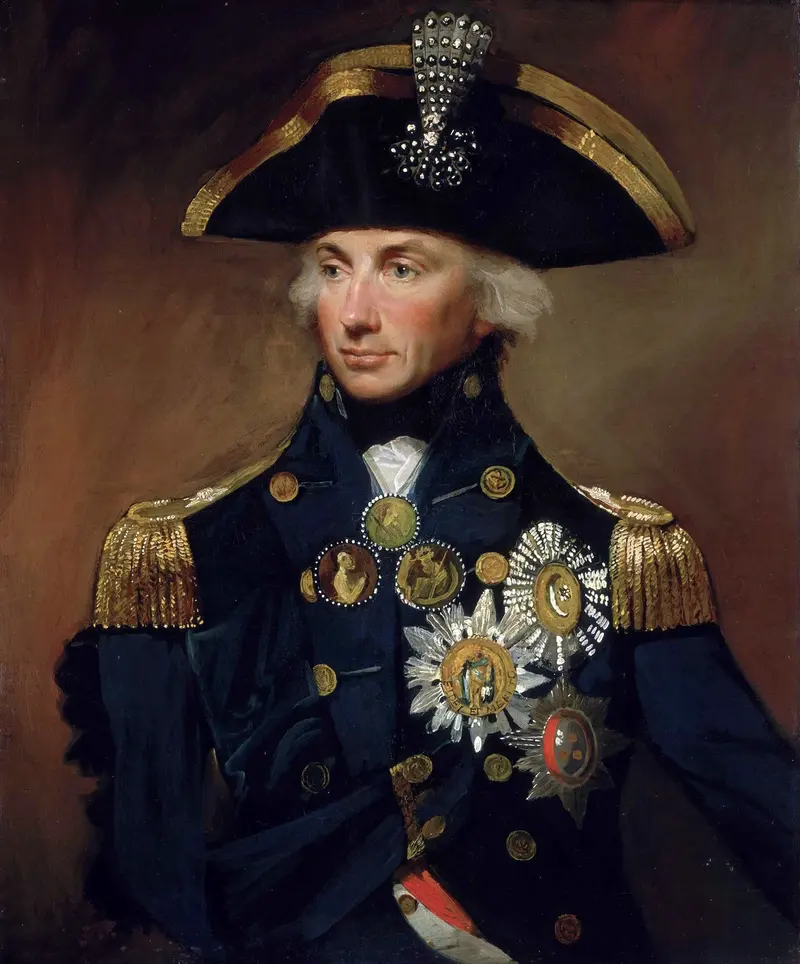
Admiral Nelson is given a state funeral at St Paul's Cathedral

Admiral Horatio Nelson was given a state funeral and buried in St Paul's Cathedral in London. A state funeral is a grand public ceremony to honour a person of great importance to the nation. Nelson was a Royal Navy officer who led Britain to many important victories at sea during the wars against France. He is widely regarded as one of the greatest admirals in history.

Painted portrait of Admiral Horatio Nelson in a navy uniform covered in medals, with a black hat
Admiral Horatio Nelson, painted by Lemuel Francis Abbott Photo: Lemuel Francis Abbott, Public domain
1816 210 years ago

UK story

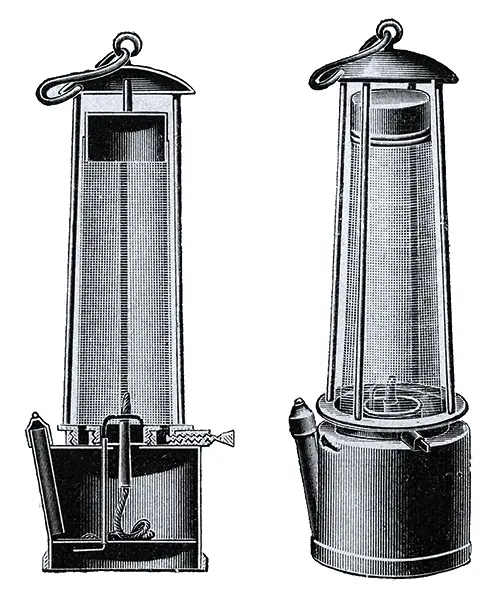
Humphry Davy's safety lamp is tested in a coal mine

Humphry Davy's new safety lamp was tested at Hebburn Colliery, a coal mine. In mines, flammable gases such as methane, called firedamp, could explode if they met an open flame. Davy's lamp kept the flame inside a mesh screen to reduce the danger. Davy was a British chemist who was also the first to separate the elements sodium and potassium.

Old drawing of two tall miners' safety lamps with mesh screens around the flame
Drawings of the Davy lamp, a safety lamp for use in coal mines Photo: Scan made by Kogo, Public domain
1909 117 years ago

UK story

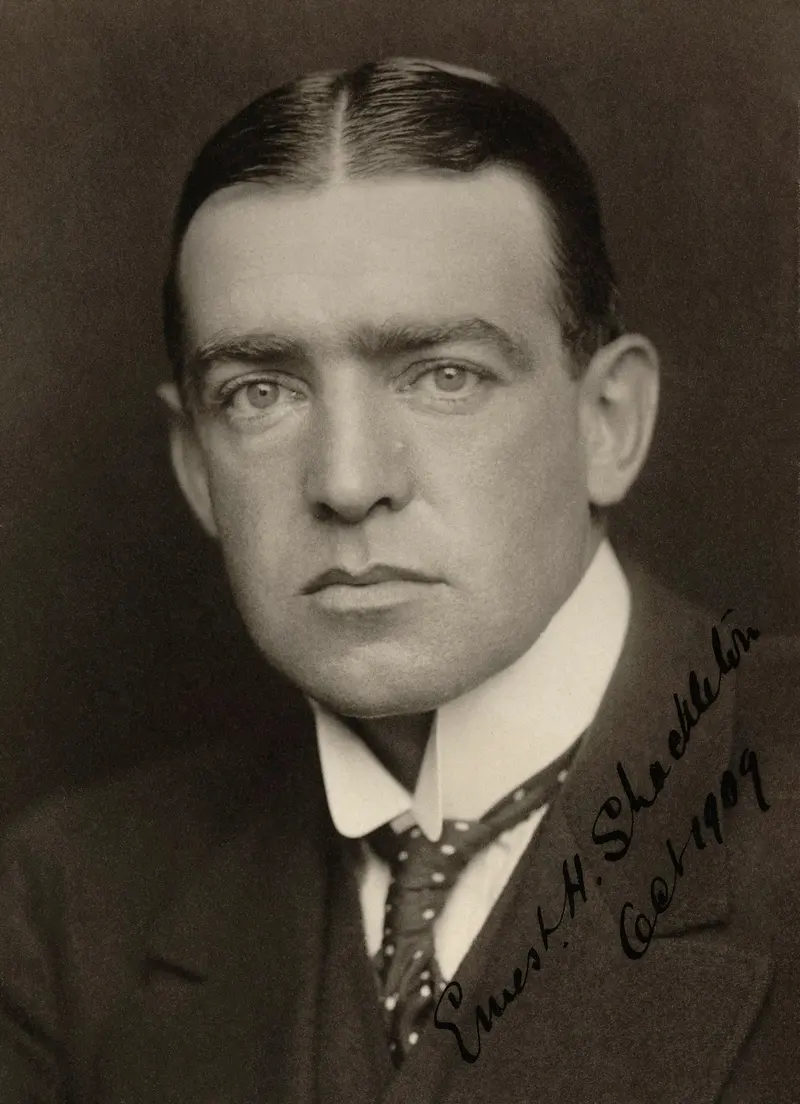
Shackleton's team gets closer to the South Pole than anyone before

During the Nimrod Expedition, Ernest Shackleton and his team planted the British flag about 180 kilometres from the South Pole. No one had ever been so far south. They did not reach the pole, but it was by far the longest journey towards a pole that anyone had made. The expedition also made the first climb of Mount Erebus, a volcano in Antarctica.

Black-and-white photo of Ernest Shackleton in a suit and tie, with his signature written across it
The explorer Ernest Shackleton Photo: George Charles Beresford / Adam Cuerden, Public domain
1941 85 years ago

UK story

The Avro Lancaster aeroplane flies for the first time

The Avro Lancaster, a British four-engine heavy bomber, made its first flight. It was designed by Roy Chadwick and powered by four Rolls-Royce Merlin engines. The Lancaster joined the Royal Air Force in 1942. It became the RAF's main heavy bomber of the Second World War and was nicknamed the 'Lanc'.

Around the world 37

1839 187 years ago

The daguerreotype photography process is announced in Paris

The French Academy of Sciences announced the daguerreotype, an early way of taking photographs. It was the second photographic process ever made available to the public. Daguerreotypes were widely used from the 1830s to the 1850s. The word 'daguerreotype' also means a picture made using this process.

1923 103 years ago

Juan de la Cierva makes the first autogyro flight

Spanish engineer Juan de la Cierva made the first successful flight in his autogyro, a stable aircraft with spinning blades. An autogyro has a rotor on top like a helicopter, but its rotor is not driven by the engine. Instead, the air turns the blades as a normal propeller pushes the aircraft forward.

1962 64 years ago

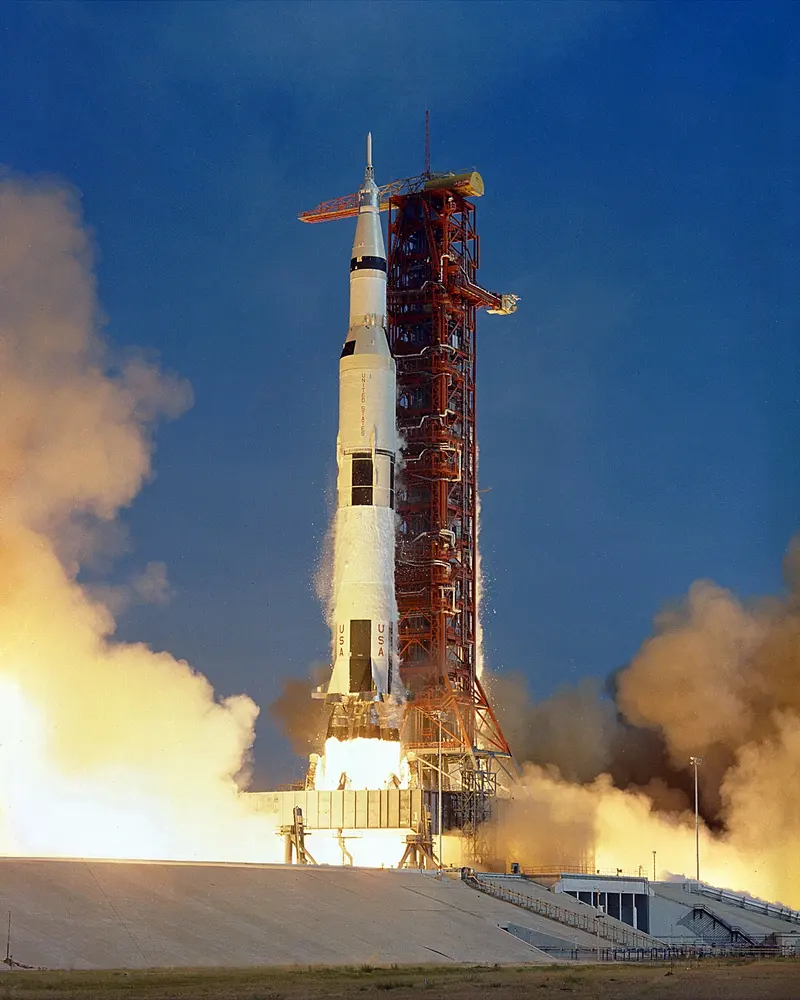
NASA announces plans for a giant Moon rocket

NASA announced plans to build a huge rocket, then called the 'Advanced Saturn', to carry people to the Moon. It became the Saturn V, a rocket with three stages. Saturn V rockets launched 24 astronauts towards the Moon on the Apollo missions. In 1969, the Apollo programme landed the first humans on the Moon.

A tall white Saturn V rocket lifting off beside its red launch tower, with clouds of smoke and flame at the bottom
The Saturn V rocket carrying the Apollo 11 astronauts lifts off in 1969 Photo: NASA, Public domain
1992 34 years ago

The first planets outside our Solar System are confirmed

Radio astronomers Aleksander Wolszczan and Dale Frail announced that they had found two planets orbiting a pulsar called PSR B1257+12. They were the first planets outside our Solar System, called exoplanets, ever to be confirmed. This pulsar spins about 160 times every second. By October 2026, more than 6,000 exoplanets had been confirmed.

2007 19 years ago

Steve Jobs introduces the first iPhone

Apple's boss, Steve Jobs, introduced the first iPhone at a Macworld event in San Francisco. The smartphone had a 3.5-inch touchscreen that could sense several fingers at once, and a web browser called Safari. It went on sale in the United States on 29 June 2007. In the same year, Apple Computer changed its name to Apple Inc., as it moved beyond computers into other electronics.

1787 239 years ago

The nationally known image of the Black Nazarene in the Philippines is transferred from what is now Rizal Park to its present shrine in the minor basilica of Quiapo Church. This is annually commemorated through its Traslación (solemn transfer) in the streets of Manila and is attended by millions of devotees.

1923 103 years ago

Lithuanian residents of the Memel Territory rebel against the League of Nations' decision to leave the area as a mandated region under French control.

1939 87 years ago

The Kingdom of Italy would officially the coastal areas of its Colony of Libya as an integral part of the country itself, becoming the nation's Fourth Shore.

1972 54 years ago

The Los Angeles Lakers of the National Basketball Association lost to the Milwaukee Bucks, ending a 33-game winning streak, the longest in major American professional team sports.

Quick quiz

Every answer is somewhere on this page. Have a go, then check!

  1. In which year did this happen: “Admiral Nelson is given a state funeral at St Paul's Cathedral”?

    1. 1806
    2. 1917
    3. 1816
    Show the answer

    A: 1806. 1806 — that’s 220 years ago. Find it on the page

  2. In which year did this happen: “William Pitt the Younger introduces income tax”?

    1. 1799
    2. 1982
    3. 1917
    Show the answer

    A: 1799. 1799 — that’s 227 years ago. Find it on the page

  3. Which of these happened first?

    1. Humphry Davy's safety lamp is tested in a coal mine
    2. William Pitt the Younger introduces income tax
    3. Admiral Nelson is given a state funeral at St Paul's Cathedral
    Show the answer

    B: William Pitt the Younger introduces income tax. 1816: Humphry Davy's safety lamp is tested in a coal mine · 1799: William Pitt the Younger introduces income tax · 1806: Admiral Nelson is given a state funeral at St Paul's Cathedral Find it on the page

  4. “Humphry Davy's safety lamp is tested in a coal mine” happened in 1816. How many years ago was that?

    1. 210 years
    2. 220 years
    3. 200 years
    Show the answer

    A: 210 years. 2026 − 1816 = 210. Find it on the page

Born on this day 40

Famous people whose birthday is 9 January.

Remembering 18

Well-known people who died on 9 January.

Special days 11

Festivals, holidays and saints’ days celebrated on 9 January somewhere in the world.

For older readers 20 Show stories about war, disasters, crime and other difficult history

Content note: these entries mention things like war, violence, deaths, disasters or crime. They are part of history, but they can be upsetting. Grown-ups and teachers: you may want to read them first. They come straight from Wikipedia and have not been rewritten for children.

Where these facts come from

Stories with a heading have been written for young readers by A Day in the Past, using the linked articles as sources. Other entries show text from Wikipedia’s “January 9” page and its “On this day” feed, written by Wikipedia contributors and shared under the Creative Commons Attribution-ShareAlike 4.0 licence. Each “Read more” link goes to the article an entry is based on. Photos are credited under each picture. Spotted a mistake? Please tell us.