A Day in the Past

On this day: 8 January

142 things happened on 8 January, from AD 307 to 2023. UK stories come first, then the rest of the world.

Printable worksheet Take the quiz

Did you know?

In the UK 7

UK history first: stories from England, Scotland, Wales and Northern Ireland.

AD 871 1,155 years ago

UK story

Æthelred and Alfred defeat the Vikings at the Battle of Ashdown

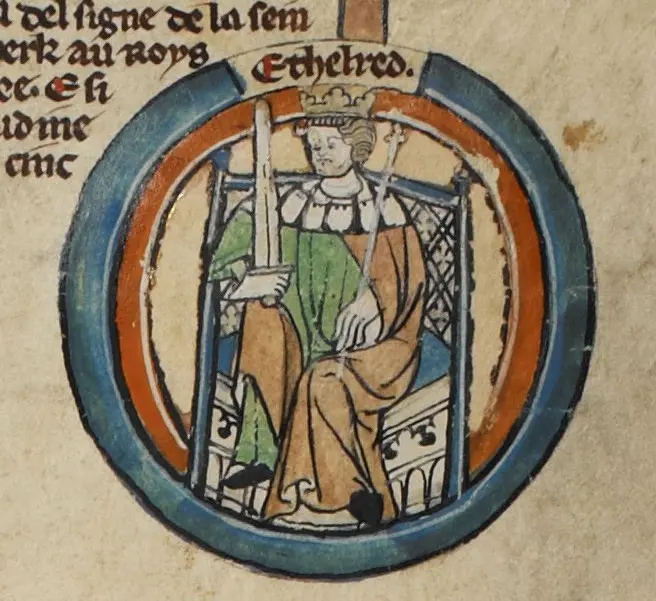
At the Battle of Ashdown, a West Saxon army beat a Danish Viking army. It was led by King Æthelred of Wessex and his younger brother Alfred. Nobody knows exactly where Ashdown was, but it may have been in Berkshire. Alfred became king later that year and is remembered as Alfred the Great.

Medieval painting in a round frame of King Æthelred sitting on a throne, wearing a crown and holding an upright sword
King Æthelred of Wessex in a royal family tree made in the 1300s Photo: Unknown author, Public domain
1735 291 years ago

UK story

Handel's opera Ariodante is first performed in London

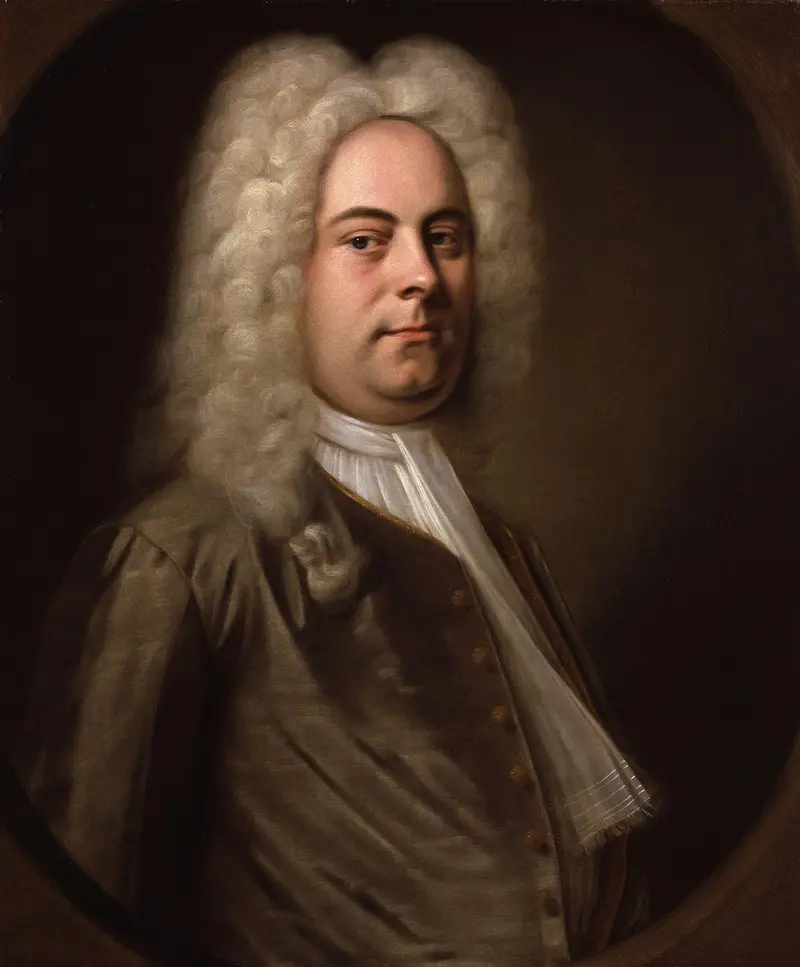
Ariodante, an opera by George Frideric Handel, was performed for the first time at the Covent Garden Theatre in London. Its story was based on part of a long Italian poem called Orlando Furioso. Each act includes dances, written for the dancer Marie Sallé and her company. Handel was a German-British composer, famous for his operas, oratorios and anthems.

Painted portrait of George Frideric Handel wearing a big curly white wig
George Frideric Handel, in a portrait attributed to Balthasar Denner Photo: Attributed to Balthasar Denner, Public domain
1746 280 years ago

UK story

Bonnie Prince Charlie's Jacobite army takes Stirling

During the Jacobite rising of 1745, Charles Edward Stuart and his army occupied the town of Stirling in Scotland. Charles, known as Bonnie Prince Charlie, was the grandson of King James VII and II. He led the rising to try to win back the thrones of England, Scotland and Ireland for the exiled Stuart family. The rising failed, and it was the last of the Jacobite risings.

1940 86 years ago

UK story

Food rationing begins in Britain in the Second World War

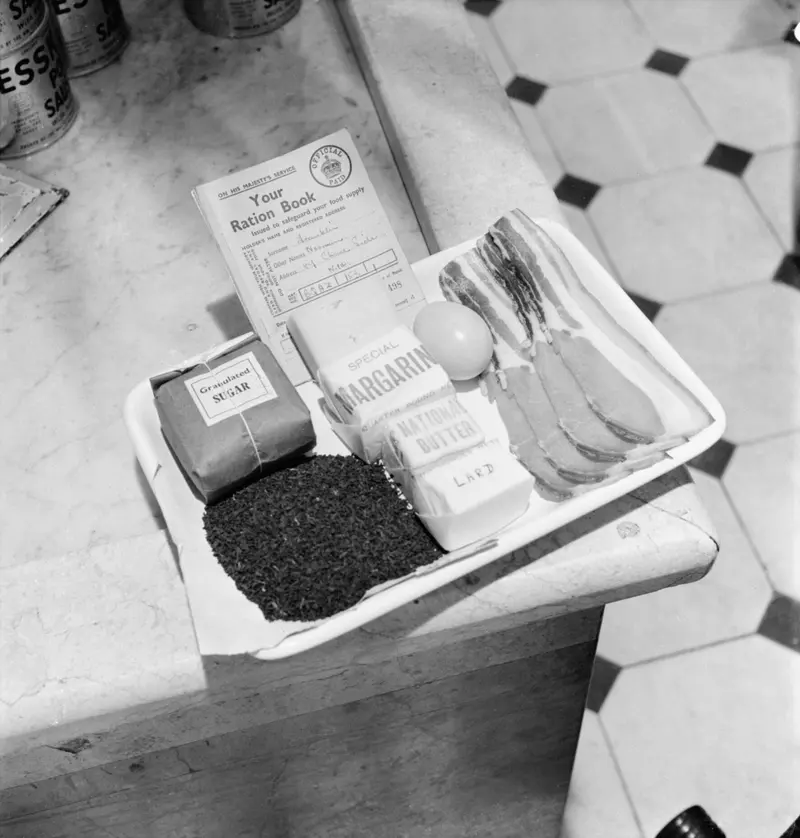
Britain began rationing food, which means limiting how much of it each person could buy. Bacon, butter and sugar were the first foods to be rationed. Everyone had a ration book with coupons, and shopkeepers cancelled the coupons when rationed food was bought. Later, many more foods were rationed, including meat, tea, cheese and eggs, but vegetables and bread were not.

Black-and-white photo of a tray holding a ration book, a little sugar, tea, margarine, butter, lard, one egg, bacon and cheese
One adult's weekly food ration in Britain in 1942, with a ration book Photo: Ministry of Information Photo Division Photographer, Public domain
2004 22 years ago

UK story

The Queen names the ocean liner Queen Mary 2

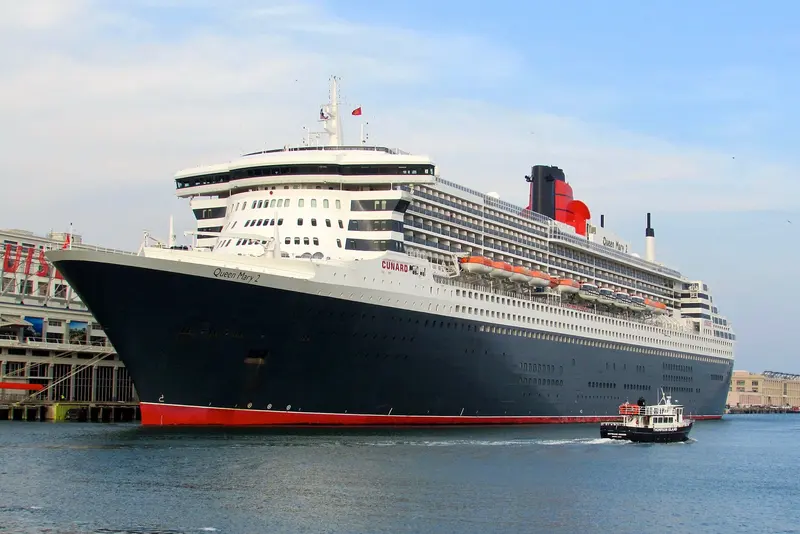
Queen Elizabeth II christened, or officially named, the ocean liner RMS Queen Mary 2. The ship was named after Queen Mary, the Queen's grandmother. At the time it was the largest ocean liner ever built. Queen Mary 2 sails across the Atlantic between Southampton and New York, and it is the only ocean liner still in service.

A huge black-and-white ocean liner with a red funnel moored at a harbour on a sunny day
The ocean liner Queen Mary 2 in the port of Boston Photo: Oceanhistory46, CC BY-SA 4.0

Around the world 36

1297 729 years ago

Disguised as a monk, François Grimaldi captures Monaco

François Grimaldi, a nobleman from Genoa, led his men to capture the fortress on the Rock of Monaco during the night. Grimaldi was disguised as a monk. His family, the House of Grimaldi, has ruled Monaco ever since. Monaco is now the second smallest country in the world, after Vatican City.

1889 137 years ago

Herman Hollerith is granted a patent for his punched-card machine

American inventor Herman Hollerith received a patent for his tabulating machine. It used electricity to count information stored as holes punched in stiff paper cards. The machine was developed to help process the results of the 1890 United States census. His invention began the era of machine data processing, and punched cards were later used in early computing.

1912 114 years ago

The African National Congress is founded in South Africa

The African National Congress, or ANC, was founded in South Africa, at first under the name South African Native National Congress. It became a liberation movement known for opposing apartheid, a system that kept people apart by race. In 1994, after the first election following apartheid, the ANC's Nelson Mandela became President of South Africa. The ANC has governed the country since then.

1973 53 years ago

Luna 21 sets off to carry a rover to the Moon

The Soviet Union launched Luna 21, a spacecraft with no crew. It landed on the Moon and released Lunokhod 2, the second Soviet Moon rover. The mission's goals included taking pictures of the Moon's surface and studying its soil and magnetic fields. It also measured X-rays coming from the Sun.

1994 32 years ago

Valeri Polyakov begins a record 437 days in space

Russian cosmonaut Valeri Polyakov set off on Soyuz TM-18 for the Mir space station. He stayed on board until 22 March 1995, spending a record 437 days in space. He still holds the record for the longest single stay in space. During his long flight, he carried out research into space medicine.

1454 572 years ago

The papal bull Romanus Pontifex awards the Kingdom of Portugal exclusive trade and colonization rights to all of Africa south of Cape Bojador.

1981 45 years ago

In Trans-en-Provence, France, a local farmer reported a UFO sighting claimed to be "perhaps the most completely and carefully documented sighting of all time".

Quick quiz

Every answer is somewhere on this page. Have a go, then check!

  1. In which year did this happen: “Handel's opera Ariodante is first performed in London”?

    1. 1912
    2. AD 871
    3. 1735
    Show the answer

    C: 1735. 1735 — that’s 291 years ago. Find it on the page

  2. In which year was Stephen Hawking born?

    1. 1942
    2. 1994
    3. AD 871
    Show the answer

    A: 1942. 1942 — that’s 84 years ago. Find it on the page

  3. Which of these happened first?

    1. Handel's opera Ariodante is first performed in London
    2. The Queen names the ocean liner Queen Mary 2
    3. Æthelred and Alfred defeat the Vikings at the Battle of Ashdown
    Show the answer

    C: Æthelred and Alfred defeat the Vikings at the Battle of Ashdown. 1735: Handel's opera Ariodante is first performed in London · 2004: The Queen names the ocean liner Queen Mary 2 · AD 871: Æthelred and Alfred defeat the Vikings at the Battle of Ashdown Find it on the page

  4. “The Queen names the ocean liner Queen Mary 2” happened in 2004. How many years ago was that?

    1. 12 years
    2. 32 years
    3. 22 years
    Show the answer

    C: 22 years. 2026 − 2004 = 22. Find it on the page

Born on this day 39

Famous people whose birthday is 8 January.

Remembering 22

Well-known people who died on 8 January.

Special days 15

Festivals, holidays and saints’ days celebrated on 8 January somewhere in the world.

For older readers 23 Show stories about war, disasters, crime and other difficult history

Content note: these entries mention things like war, violence, deaths, disasters or crime. They are part of history, but they can be upsetting. Grown-ups and teachers: you may want to read them first. They come straight from Wikipedia and have not been rewritten for children.

Where these facts come from

Stories with a heading have been written for young readers by A Day in the Past, using the linked articles as sources. Other entries show text from Wikipedia’s “January 8” page and its “On this day” feed, written by Wikipedia contributors and shared under the Creative Commons Attribution-ShareAlike 4.0 licence. Each “Read more” link goes to the article an entry is based on. Photos are credited under each picture. Spotted a mistake? Please tell us.