A Day in the Past

On this day: 7 January

131 things happened on 7 January, from 49 BC to 2025. UK stories come first, then the rest of the world.

Printable worksheet Take the quiz

Did you know?

In the UK 7

UK history first: stories from England, Scotland, Wales and Northern Ireland.

1327 699 years ago

UK story

The Parliament that removes Edward II from the throne begins

A Parliament began meeting at the Palace of Westminster that would help remove King Edward II from the throne. Edward had become very unpopular with England's nobles, partly because of the favourites he kept at court. His wife, Queen Isabella, and the nobleman Roger Mortimer had invaded England to depose him. The crown passed to his son, who became King Edward III.

1558 468 years ago

UK story

France captures Calais, England's last town in mainland Europe

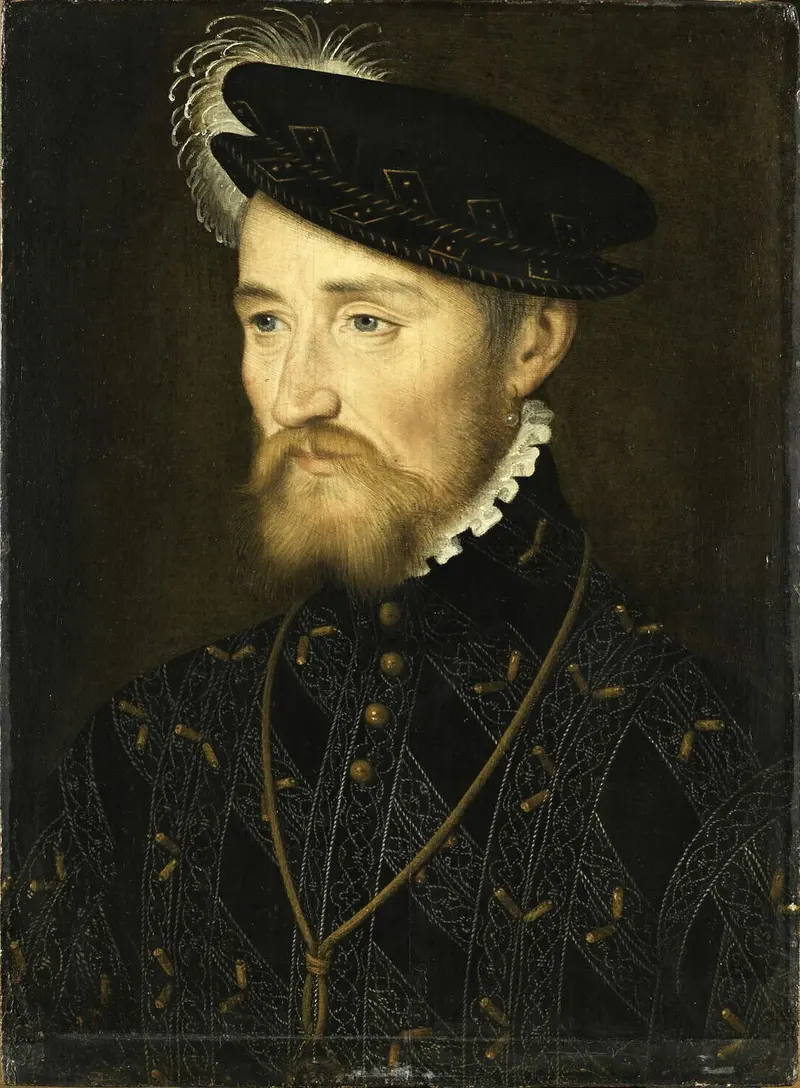
French troops led by Francis, Duke of Guise, captured the port of Calais from England. The area around Calais, called the Pale of Calais, had been ruled by England since 1347, during the Hundred Years' War. It was England's last possession on the European mainland. At the time England was ruled by Queen Mary I and her husband, Philip II of Spain.

Painted portrait of a bearded man in a black hat with a white feather and a white ruff collar
Francis, Duke of Guise, painted by the workshop of François Clouet Photo: Workshop of François Clouet, Public domain
1785 241 years ago

UK story

A gas balloon makes the first flight across the English Channel

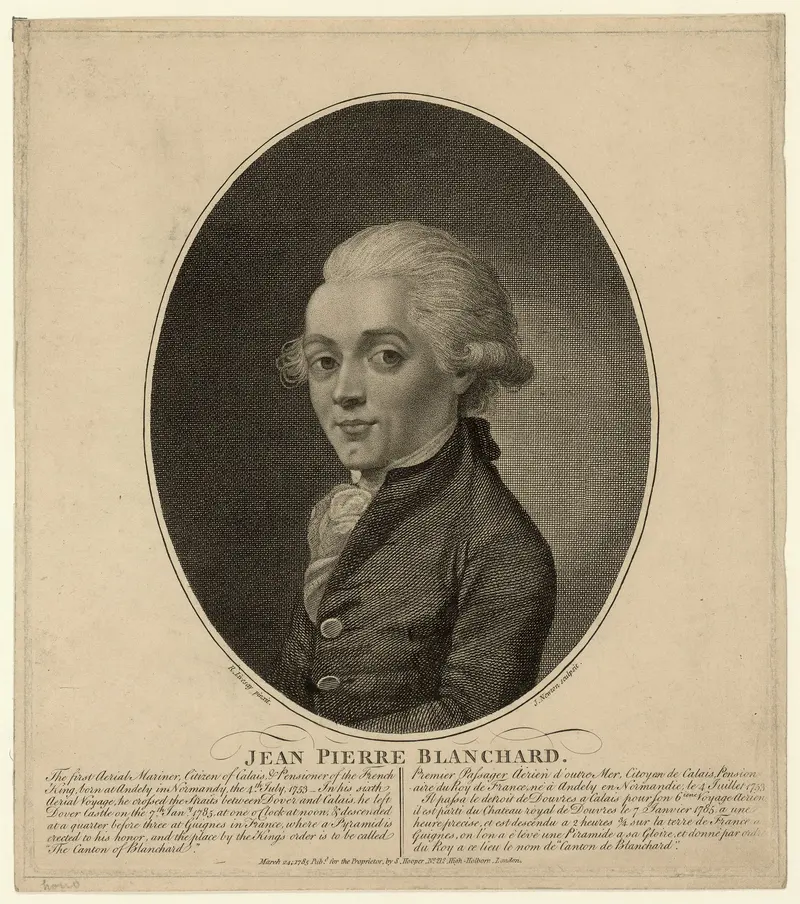
French inventor Jean-Pierre Blanchard and American doctor John Jeffries flew from Dover, in England, to Calais, in France, in a gas balloon. It was the first time anyone had crossed the English Channel through the air. Here, at the Strait of Dover, the Channel is only 34 kilometres wide. Blanchard was a pioneer of gas balloon flight.

Old engraved portrait of Jean-Pierre Blanchard in an oval frame
Jean-Pierre Blanchard, the French balloonist Photo: J. Newton, sculpsit ; R. Livesay, pinxit, Public domain
1835 191 years ago

UK story

HMS Beagle, with Charles Darwin aboard, reaches the Chonos Islands

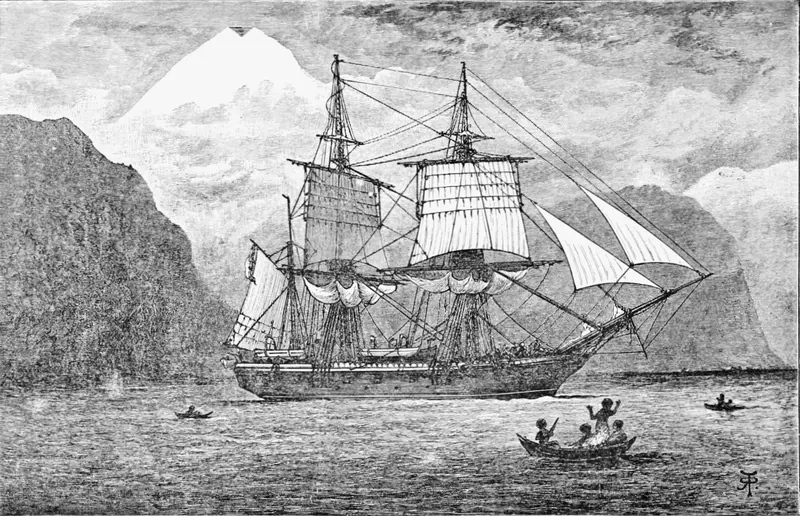
The Royal Navy survey ship HMS Beagle dropped anchor off the Chonos Archipelago, a group of islands. On board was the naturalist Charles Darwin. Darwin later became famous for his theory of evolution by natural selection. It explains how all species of living things are descended from a common ancestor.

Old engraving of a three-masted sailing ship in a narrow channel between steep mountains, with small boats nearby
HMS Beagle in the Straits of Magellan, drawn by R. T. Pritchett Photo: R. T. Pritchett, Public domain
1904 122 years ago

UK story

Marconi's company chooses CQD as a radio distress call

The Marconi International Marine Communication Company announced that ships in distress, or needing help, should send the radio call 'CQD'. It was one of the first distress signals used on radio. It was part of the business of Guglielmo Marconi, an Italian inventor and pioneer of long-distance wireless communication. His British firm, the Marconi Company, became one of the UK's most successful manufacturers.

1989 37 years ago

UK story

Non-league Sutton United knock Coventry City out of the FA Cup

In one of the most famous shocks in FA Cup history, Sutton United beat Coventry City 2–1. Sutton played in the Conference, the fifth level of English football, while Coventry were in the top division. Coventry had gone into the third-round match as strong favourites. The FA Cup, first played in the 1871–72 season, is the oldest national football competition in the world.

Around the world 31

1610 416 years ago

Galileo spots four of Jupiter's moons through his telescope

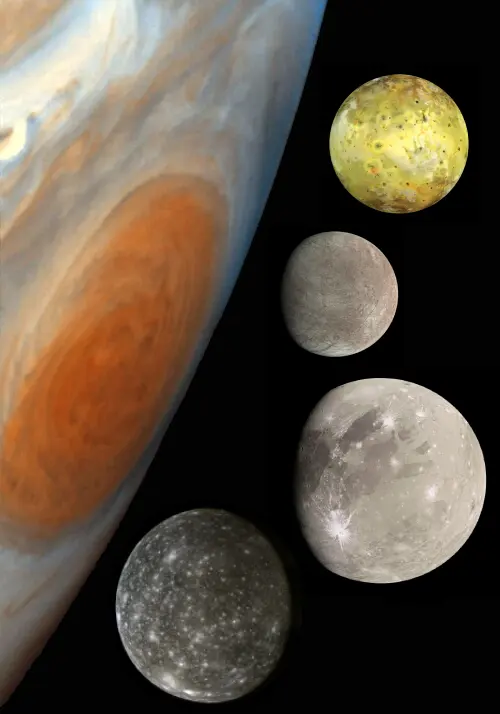
Looking through his telescope, Italian astronomer Galileo Galilei saw Jupiter's four largest moons: Io, Europa, Ganymede and Callisto. At first he could not tell Io and Europa apart, but he managed it the following night. They were the first objects ever found orbiting a planet other than Earth. They are now called the Galilean moons, after him.

The edge of the stripy planet Jupiter with its four biggest moons lined up beside it
A picture made from space photos showing Jupiter and its four large moons, the ones Galileo saw Photo: WhatADrag07, CC BY-SA 4.0
1894 132 years ago

Thomas Edison films someone sneezing

Thomas Edison made a short kinetoscope film of someone sneezing. On the same day, his employee William Kennedy Dickson received a patent for motion picture film. Dickson, a British-American inventor, had designed an early film camera while working for Edison. Edison is also famous for his work on the light bulb and the phonograph, an early machine for recording sound.

1927 99 years ago

The first telephone service across the Atlantic opens

The first commercial telephone service across the Atlantic Ocean began, linking New York City and London. For the first time, customers could pay to talk by phone between the United States and Britain. The first patent for a telephone had been granted to Alexander Graham Bell about 50 years earlier, in 1876.

1939 87 years ago

Marguerite Perey discovers the element francium

French physicist Marguerite Perey identified a new chemical element, francium. It was the last element to be discovered in nature rather than made by scientists. Francium is extremely radioactive and very rare. Perey had been a student of Marie Curie, and in 1962 she became the first woman elected to the French Academy of Sciences.

1985 41 years ago

Japan Aerospace Exploration Agency launches Sakigake, Japan's first interplanetary spacecraft and the first deep space probe to be launched by any country other than the United States or the Soviet Union.

1989 37 years ago

Representatives of Iranian leader Ruhollah Khomeini delivered a letter to Mikhail Gorbachev, inviting him to consider Islam as an alternative to communism, and predicting the dissolution of the Soviet Bloc.

Quick quiz

Every answer is somewhere on this page. Have a go, then check!

  1. In which year did this happen: “Non-league Sutton United knock Coventry City out of the FA Cup”?

    1. 1927
    2. 1989
    3. 1939
    Show the answer

    B: 1989. 1989 — that’s 37 years ago. Find it on the page

  2. In which year did this happen: “The Parliament that removes Edward II from the throne begins”?

    1. 1558
    2. 1327
    3. 1785
    Show the answer

    B: 1327. 1327 — that’s 699 years ago. Find it on the page

  3. Which of these happened first?

    1. The Parliament that removes Edward II from the throne begins
    2. Non-league Sutton United knock Coventry City out of the FA Cup
    3. Marconi's company chooses CQD as a radio distress call
    Show the answer

    A: The Parliament that removes Edward II from the throne begins. 1327: The Parliament that removes Edward II from the throne begins · 1989: Non-league Sutton United knock Coventry City out of the FA Cup · 1904: Marconi's company chooses CQD as a radio distress call Find it on the page

  4. “Marconi's company chooses CQD as a radio distress call” happened in 1904. How many years ago was that?

    1. 132 years
    2. 112 years
    3. 122 years
    Show the answer

    C: 122 years. 2026 − 1904 = 122. Find it on the page

Born on this day 39

Famous people whose birthday is 7 January.

Remembering 21

Well-known people who died on 7 January.

Special days 13

Festivals, holidays and saints’ days celebrated on 7 January somewhere in the world.

For older readers 20 Show stories about war, disasters, crime and other difficult history

Content note: these entries mention things like war, violence, deaths, disasters or crime. They are part of history, but they can be upsetting. Grown-ups and teachers: you may want to read them first. They come straight from Wikipedia and have not been rewritten for children.

Where these facts come from

Stories with a heading have been written for young readers by A Day in the Past, using the linked articles as sources. Other entries show text from Wikipedia’s “January 7” page and its “On this day” feed, written by Wikipedia contributors and shared under the Creative Commons Attribution-ShareAlike 4.0 licence. Each “Read more” link goes to the article an entry is based on. Photos are credited under each picture. Spotted a mistake? Please tell us.