A Day in the Past

On this day: 24 October

146 things happened on 24 October, from AD 51 to 2025. UK stories come first, then the rest of the world.

Printable worksheet Take the quiz

Did you know?

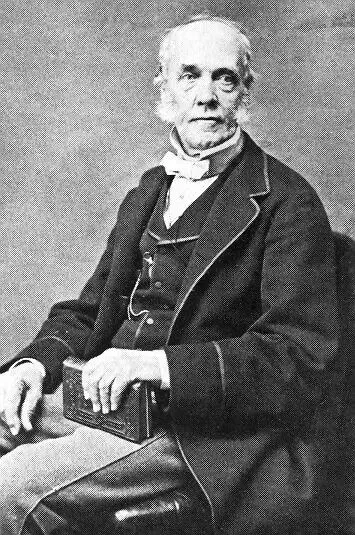
Old black-and-white photo of the astronomer William Lassell sitting in a chair
Photo: Unknown author, Public domain

1851 · 175 years ago

William Lassell discovers two new moons of Uranus

The English astronomer William Lassell discovered Ariel and Umbriel, two moons of the planet Uranus. They were only the third and fourth of its moons to be found. Umbriel is made mostly of ice mixed with rock, and has a very dark surface. Lassell was a mercha…
In the UK 9

UK history first: stories from England, Scotland, Wales and Northern Ireland.

1590 436 years ago

UK story

John White returns to England without finding the Lost Colony

John White, governor of the Roanoke Colony in North America, returned to England after failing to find the missing settlers. The colony was an attempt by Sir Walter Raleigh to start the first permanent English settlement in North America. It became known as the Lost Colony, because White could not find any of its settlers. White was also an artist and mapmaker.

1596 430 years ago

UK story

Storms wreck the second Spanish Armada sent against England

King Philip II of Spain sent a second Spanish Armada to strike against England. He wanted revenge for an English attack on the Spanish port of Cádiz earlier that year, and hoped to help rebels in Ireland. But the fleet was battered by storms off Cape Finisterre in Spain. The ships had to turn back to port.

1851 175 years ago

UK story

William Lassell discovers two new moons of Uranus

The English astronomer William Lassell discovered Ariel and Umbriel, two moons of the planet Uranus. They were only the third and fourth of its moons to be found. Umbriel is made mostly of ice mixed with rock, and has a very dark surface. Lassell was a merchant who also improved the design of reflecting telescopes.

Old black-and-white photo of the astronomer William Lassell sitting in a chair
William Lassell, British astronomer Photo: Unknown author, Public domain
1857 169 years ago

UK story

Sheffield FC, the world's oldest football club, is founded

Sheffield Football Club was founded in England. FIFA, which runs world football, considers it the oldest independent club still playing football anywhere in the world. Unlike many famous clubs, it plays at a much lower level, in the ninth tier of English football. It is now based in Dronfield, in Derbyshire.

1885 141 years ago

UK story

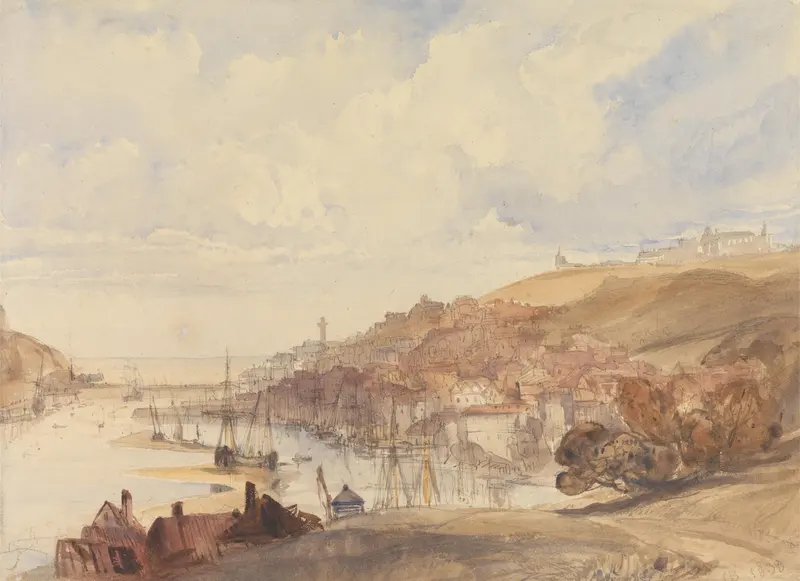
A shipwreck at Whitby inspires a scene in Dracula

During a gale, the Russian cargo ship Dmitry tried to shelter in the harbour at Whitby, England. It escaped the rocks but drifted onto a sandbank and was wrecked the next day. The author Bram Stoker heard about the wreck. It inspired the moment Count Dracula arrives in England in his famous 1897 novel, Dracula.

Watercolour painting of the harbour town of Whitby on a cliff, with boats below
Whitby, painted by Charles Bentley (Yale Center for British Art) Photo: Charles Bentley, CC0
2003 23 years ago

UK story

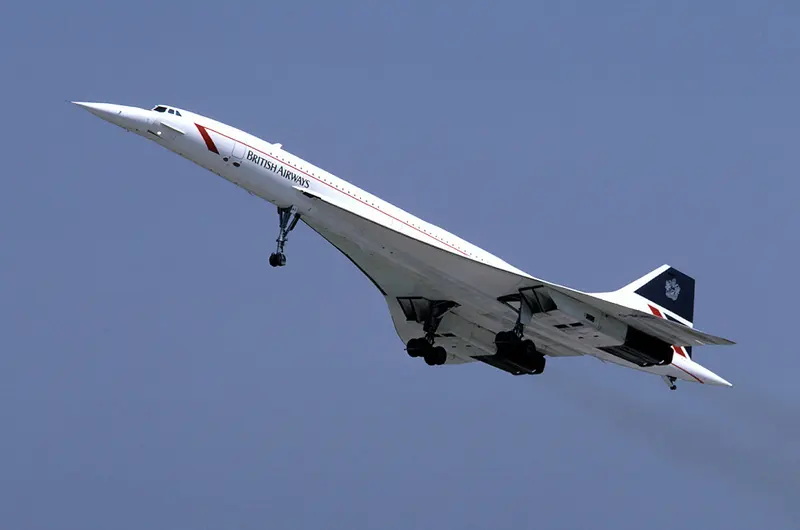
Concorde makes its last passenger flight

Concorde, the supersonic airliner, made its last commercial flight. Supersonic means it could fly faster than the speed of sound. Concorde was built jointly by Britain and France, and first flew from Toulouse in 1969. Work on the design had begun back in 1954.

A white British Airways Concorde jet with its pointed nose flying against a blue sky
British Airways Concorde G-BOAC in flight Photo: Eduard Marmet, CC BY-SA 3.0

Around the world 40

1911 115 years ago

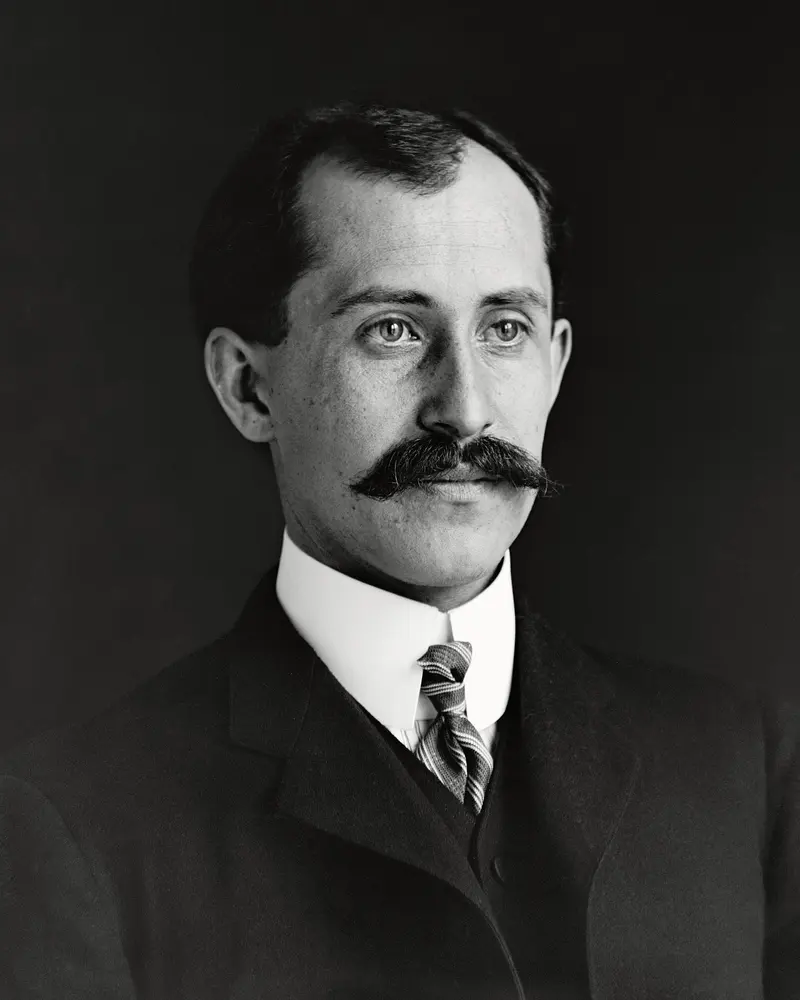
Orville Wright glides for nearly ten minutes

Orville Wright stayed in the air for nine minutes and 45 seconds in a glider at Kill Devil Hills, North Carolina. A glider is an aircraft with no engine. Orville and his brother Wilbur are credited with inventing and flying the world's first successful aeroplane. Their first powered flight took place in North Carolina in 1903, about 6 kilometres south of Kitty Hawk.

Black-and-white photo of Orville Wright with a moustache, wearing a suit and tie
Orville Wright in 1905 Photo: Orville Wright and Wilbur Wright (credited as photographers), Public domain
1945 81 years ago

The United Nations is officially created

The Charter of the United Nations came into force, officially creating the United Nations. This happened once enough countries had approved it, including the five permanent members of the Security Council. The Charter sets out what the UN is for and how it works. Every year, the date is marked as United Nations Day.

Founding of the United Nations - San Francisco 1945 | Archives | United Nations — United Nations on YouTube. The video loads from YouTube when you press play. Watch on YouTube
1964 62 years ago

Northern Rhodesia becomes the independent country of Zambia

Northern Rhodesia, a British protectorate in southern Africa, gained its independence from the United Kingdom. It became the new country of Zambia. A protectorate is a land that is controlled and protected by a more powerful country. Northern Rhodesia had been formed in 1911 by joining two earlier protectorates together.

1975 51 years ago

Women in Iceland take a day off to demand fair pay

About 90 percent of women in Iceland went on strike for the day. They were protesting that women were paid less than men and treated unfairly at work. The women did not go to their jobs, and did no housework or childcare all day. In Iceland it became known as the Women's Day Off.

1813 213 years ago

Treaty of Gulistan: The Russo-Persian War of 1804-1813 comes to a close with the signing of the Treaty of Gulistan, under which terms Qajar Iran agrees to cede the bulk of its Caucasian territories, which comprise much of modern Dagestan, Georgia, Armenia, and Azerbaijan, to the Russian Empire.

1894 132 years ago

First Sino-Japanese War: Battle of Jiuliancheng: Under the command of General Yamagata Aritomo, the Imperial Japanese Army covertly crosses the Yalu River into Qing territory and launches an assault on the fortifications at Hushan.

Quick quiz

Every answer is somewhere on this page. Have a go, then check!

  1. In which year did this happen: “William Lassell discovers two new moons of Uranus”?

    1. 1851
    2. 1911
    3. 1596
    Show the answer

    A: 1851. 1851 — that’s 175 years ago. Find it on the page

  2. In which year did this happen: “A shipwreck at Whitby inspires a scene in Dracula”?

    1. 1885
    2. 1590
    3. 1964
    Show the answer

    A: 1885. 1885 — that’s 141 years ago. Find it on the page

  3. Which of these happened first?

    1. William Lassell discovers two new moons of Uranus
    2. A shipwreck at Whitby inspires a scene in Dracula
    3. Concorde makes its last passenger flight
    Show the answer

    A: William Lassell discovers two new moons of Uranus. 1851: William Lassell discovers two new moons of Uranus · 1885: A shipwreck at Whitby inspires a scene in Dracula · 2003: Concorde makes its last passenger flight Find it on the page

  4. “Concorde makes its last passenger flight” happened in 2003. How many years ago was that?

    1. 23 years
    2. 33 years
    3. 13 years
    Show the answer

    A: 23 years. 2026 − 2003 = 23. Find it on the page

Born on this day 37

Famous people whose birthday is 24 October.

Remembering 19

Well-known people who died on 24 October.

Special days 14

Festivals, holidays and saints’ days celebrated on 24 October somewhere in the world.

For older readers 27 Show stories about war, disasters, crime and other difficult history

Content note: these entries mention things like war, violence, deaths, disasters or crime. They are part of history, but they can be upsetting. Grown-ups and teachers: you may want to read them first. They come straight from Wikipedia and have not been rewritten for children.

Where these facts come from

Stories with a heading have been written for young readers by A Day in the Past, using the linked articles as sources. Other entries show text from Wikipedia’s “October 24” page and its “On this day” feed, written by Wikipedia contributors and shared under the Creative Commons Attribution-ShareAlike 4.0 licence. Each “Read more” link goes to the article an entry is based on. Photos are credited under each picture. Spotted a mistake? Please tell us.