A Day in the Past

On this day: 28 February

95 things happened on 28 February, from 202 BC to 2026. UK stories come first, then the rest of the world.

Printable worksheet Take the quiz

Did you know?

In the UK 5

UK history first: stories from England, Scotland, Wales and Northern Ireland.

1638 388 years ago

UK story

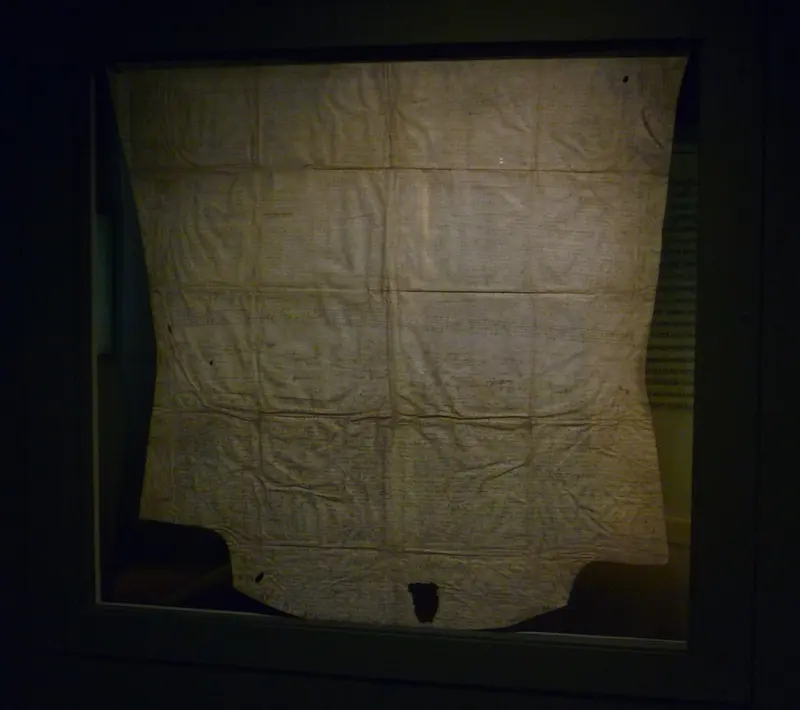
Scots adopt the National Covenant against Charles I's church changes

The National Covenant was formally adopted in Scotland. It was an agreement, signed by many Scottish people, opposing changes that King Charles I was trying to force on the Church of Scotland. The king's plans had already caused protests across the country. The Covenant spread through most of Scotland, and its supporters became known as Covenanters.

A large old sheet of folded parchment covered in handwriting, displayed in a dim museum case
The National Covenant, believed to be the original from which copies were made, at Huntly House Museum, Edinburgh Photo: Kim Traynor, CC BY-SA 3.0
1922 104 years ago

UK story

Britain recognises Egypt as an independent country

The United Kingdom recognised Egypt as an independent country, ending its protectorate over Egypt. A protectorate is a country that runs most of its own affairs but lets a more powerful country control things such as its foreign policy and defence. The announcement was called the Unilateral Declaration of Egyptian Independence, because Britain made it on its own.

1953 73 years ago

UK story

Francis Crick and James Watson work out the structure of DNA

At the Cavendish Laboratory in Cambridge, Francis Crick and James Watson worked out the structure of DNA, the molecule that stores genetic information in living things. They showed it is shaped like a spiral called a helix, using X-ray photographs by Rosalind Franklin and Raymond Gosling. That lunchtime, Crick told people in The Eagle pub that they had 'discovered the secret of life'.

1974 52 years ago

UK story

A general election leaves Britain with a hung parliament

In a general election, Harold Wilson's Labour Party won the most seats but not an overall majority, even though Prime Minister Edward Heath's Conservatives won a bigger share of the votes. This is called a hung parliament, which means no single party has more than half of the MPs. It was the first hung parliament since 1929. The Liberal Party won more votes than ever before.

Around the world 19

202 BC 2,227 years ago

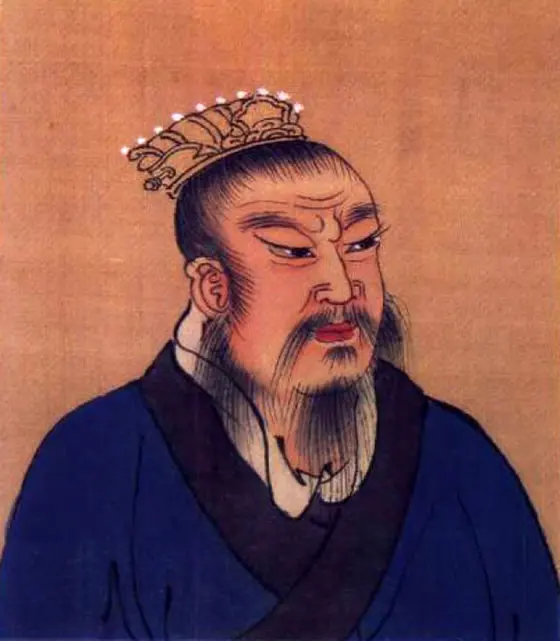
Liu Bang becomes the first emperor of China's Han dynasty

Rebel leader Liu Bang declared himself Emperor Gaozu, founder and first emperor of the Han dynasty. He had overthrown the Qin dynasty, the first imperial dynasty of China. The Qin ruler Ying Zheng had united China in 221 BC and called himself Qin Shi Huang, the first emperor of China, but the Qin dynasty collapsed in 206 BC.

Old Chinese painting of Emperor Liu Bang with a long beard and a decorated crown, wearing blue robes
Liu Bang, first emperor of the Han dynasty, in a painting from the Ming period Photo: Unknown author, Public domain
1928 98 years ago

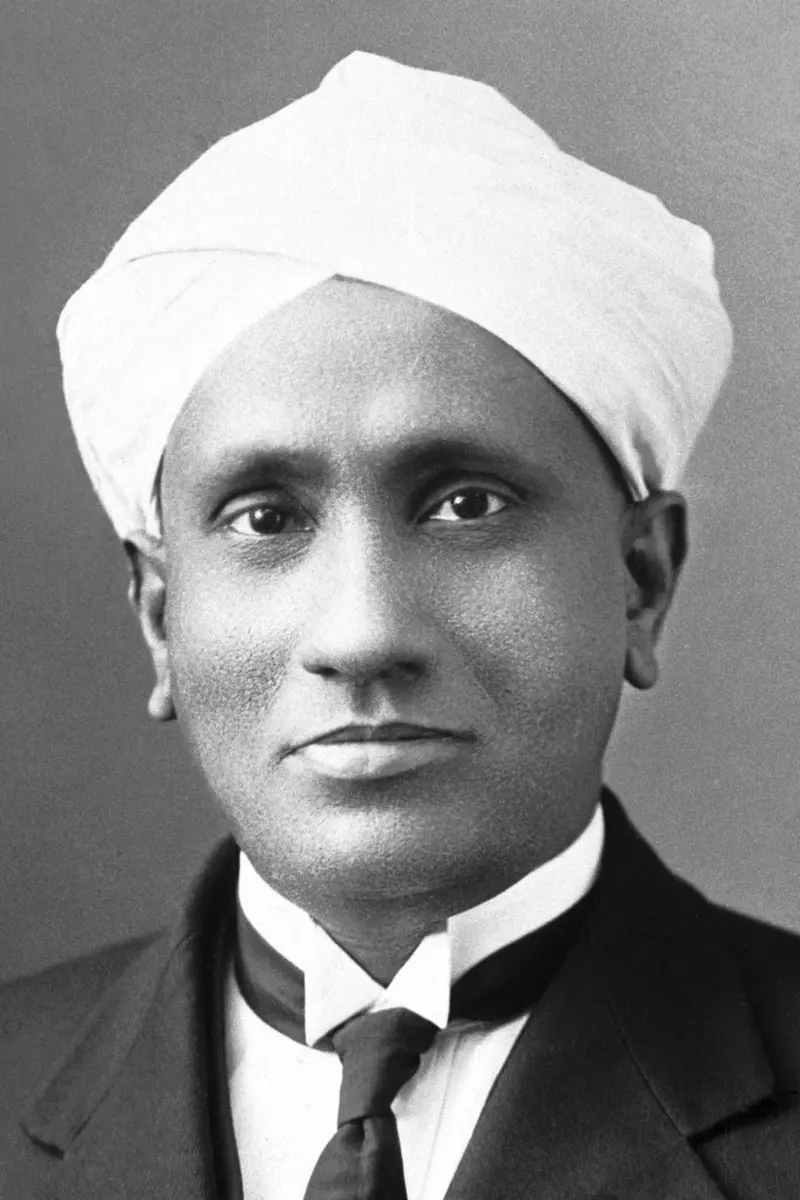
C. V. Raman discovers the Raman effect

Indian physicist C. V. Raman and his student K. S. Krishnan discovered that when light passes through a clear material, some of the light that is scattered changes its wavelength. This is now called the Raman effect. In 1930 Raman won the Nobel Prize in Physics, becoming the first Asian person to receive it. India celebrates National Science Day every 28 February to mark his discovery.

Black-and-white photo of C. V. Raman wearing a white turban and a dark suit with a bow tie
C. V. Raman, photographed for the Nobel Foundation Photo: Nobel Foundation, Public domain
1939 87 years ago

An editor discovers that 'dord' is not a real word

An editor noticed that 'dord', listed in Webster's New International Dictionary as meaning 'density', had no explanation of where the word came from. He investigated and found it was a mistake. A note reading 'D or d', meaning the letter D can stand for density, had been misread as one word. 'Dord' had been in the dictionary since 1934 and became a famous 'ghost word'.

1997 29 years ago

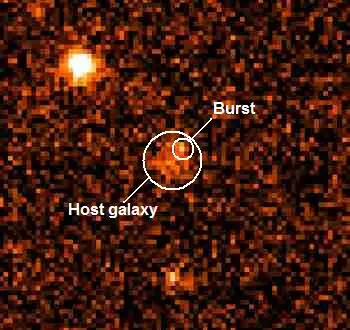
Scientists spot the first afterglow of a gamma-ray burst

Scientists detected GRB 970228, a very bright 80-second flash of gamma rays, a powerful kind of radiation. It was the first gamma-ray burst for which a fading glow, called an afterglow, was also seen. Before this, the positions of these bursts in the sky were very uncertain. The discovery gave early evidence that gamma-ray bursts happen far beyond our own galaxy, the Milky Way.

A grainy orange space image with a circle marking a faint spot labelled Burst, inside a fuzzy patch labelled Host galaxy
Gamma-ray burst GRB 970228 and its host galaxy, photographed by the Hubble Space Telescope Photo: NASA/JPL-Caltech and The Hubble Heritage Team (STScI/AURA), Public domain
2013 13 years ago

Benedict XVI becomes the first pope to resign in nearly 600 years

Pope Benedict XVI stepped down as head of the Catholic Church, as he had announced on 11 February. He was the first pope to give up the office since Gregory XII in 1415. Benedict had been pope since 2005. Afterwards he chose to be known as 'pope emeritus', a title he kept until his death in 2022.

Quick quiz

Every answer is somewhere on this page. Have a go, then check!

  1. In which year did this happen: “A general election leaves Britain with a hung parliament”?

    1. 1974
    2. 1915
    3. 1942
    Show the answer

    A: 1974. 1974 — that’s 52 years ago. Find it on the page

  2. In which year did this happen: “Scots adopt the National Covenant against Charles I's church changes”?

    1. 1638
    2. 1922
    3. 1915
    Show the answer

    A: 1638. 1638 — that’s 388 years ago. Find it on the page

  3. Which of these happened first?

    1. A general election leaves Britain with a hung parliament
    2. Britain recognises Egypt as an independent country
    3. Scots adopt the National Covenant against Charles I's church changes
    Show the answer

    C: Scots adopt the National Covenant against Charles I's church changes. 1974: A general election leaves Britain with a hung parliament · 1922: Britain recognises Egypt as an independent country · 1638: Scots adopt the National Covenant against Charles I's church changes Find it on the page

  4. “Britain recognises Egypt as an independent country” happened in 1922. How many years ago was that?

    1. 104 years
    2. 114 years
    3. 94 years
    Show the answer

    A: 104 years. 2026 − 1922 = 104. Find it on the page

Born on this day 31

Famous people whose birthday is 28 February.

Remembering 15

Well-known people who died on 28 February.

Special days 5

Festivals, holidays and saints’ days celebrated on 28 February somewhere in the world.

For older readers 20 Show stories about war, disasters, crime and other difficult history

Content note: these entries mention things like war, violence, deaths, disasters or crime. They are part of history, but they can be upsetting. Grown-ups and teachers: you may want to read them first. They come straight from Wikipedia and have not been rewritten for children.

Where these facts come from

Stories with a heading have been written for young readers by A Day in the Past, using the linked articles as sources. Other entries show text from Wikipedia’s “February 28” page and its “On this day” feed, written by Wikipedia contributors and shared under the Creative Commons Attribution-ShareAlike 4.0 licence. Each “Read more” link goes to the article an entry is based on. Photos are credited under each picture. Spotted a mistake? Please tell us.