A Day in the Past

On this day: 15 February

140 things happened on 15 February, from AD 438 to 2026. UK stories come first, then the rest of the world.

Printable worksheet Take the quiz

Did you know?

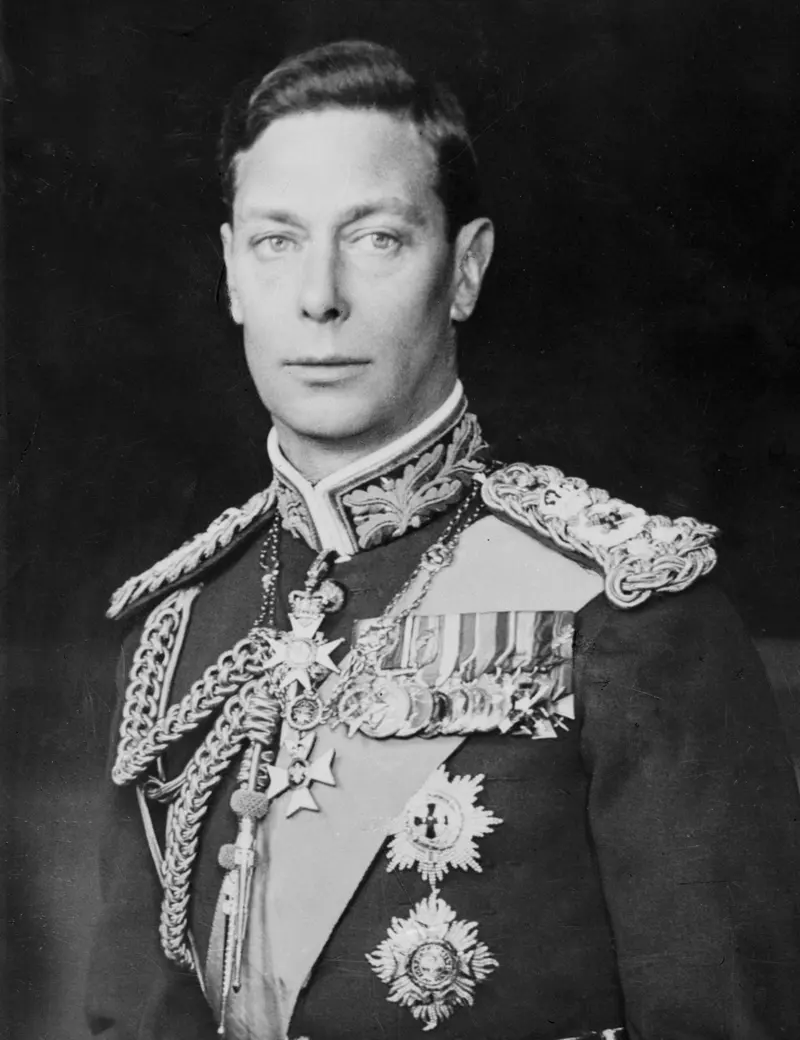
Black-and-white photo of King George VI in a dress uniform covered with medals
Photo: Matson Photo Service, Public domain

1952 · 74 years ago

King George VI is buried at St George's Chapel, Windsor

King George VI was buried in St George's Chapel at Windsor Castle, nine days after his death. As a second son, he had not expected to be king, but his brother Edward VIII gave up the throne in 1936. During the Second World War he became a symbol of Britain's …
In the UK 5

UK history first: stories from England, Scotland, Wales and Northern Ireland.

1214 812 years ago

UK story

King John lands in France to win back his lost lands

King John of England landed at La Rochelle in France with an English army. He wanted to win back lands in France that he had lost to King Philip II of France about ten years before. Instead, the war ended with Philip's victory at the Battle of Bouvines. Later, John's barons rebelled against him, which led to the sealing of Magna Carta.

1952 74 years ago

UK story

King George VI is buried at St George's Chapel, Windsor

King George VI was buried in St George's Chapel at Windsor Castle, nine days after his death. As a second son, he had not expected to be king, but his brother Edward VIII gave up the throne in 1936. During the Second World War he became a symbol of Britain's determination to win. His elder daughter became Queen Elizabeth II.

Black-and-white photo of King George VI in a dress uniform covered with medals
King George VI Photo: Matson Photo Service, Public domain
1971 55 years ago

UK story

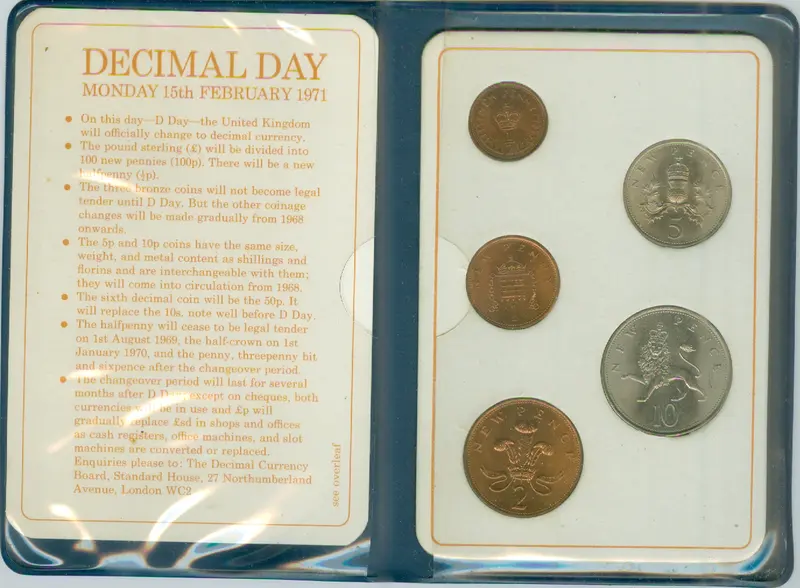
Decimal Day: Britain switches to pounds and new pence

On Decimal Day, the United Kingdom and Ireland changed their money to a decimal system. Before this, a pound was split into 20 shillings, and each shilling into 12 pence, making 240 pence in a pound. Now the shilling was scrapped, and the pound was divided into 100 new pence. Conversion tables helped people to work out the new prices.

A blue wallet holding a Decimal Day leaflet and five shiny new decimal coins
A pack of 1971 decimal coins with a Decimal Day leaflet Photo: Mandtplatt, CC BY-SA 4.0

Around the world 40

1493 533 years ago

Columbus writes a letter announcing his voyage to the Americas

On his way home across the Atlantic, Christopher Columbus wrote a letter aboard his ship, the Niña. It is the first known document announcing that his first voyage, which set out in 1492, had reached the Americas. Copies were sent to the Spanish court, and the letter was widely shared. His voyages opened the way for Europeans to explore the Americas.

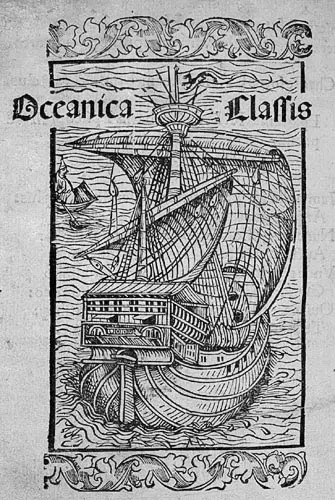
Old black-and-white woodcut picture of a sailing ship, with the words Oceanica Classis
A woodcut of a ship from the 1494 Basel edition of Columbus's letter announcing his voyage Photo: Johann Bergmann de Olpe, Public domain
1906 120 years ago

Archaeologists discover the tomb of Kha and Merit in Egypt

A team of Italian archaeologists led by Ernesto Schiaparelli found the tomb of Kha and his wife, Merit, in Egypt. Kha was a foreman in charge of the workers who built royal tombs for three pharaohs, including Amenhotep III. The tomb lies in the cemetery of Deir el-Medina, the village where these tomb-builders lived. It dates from the New Kingdom of ancient Egypt.

1923 103 years ago

Greece adopts the Gregorian calendar, the last in Europe to do so

Greece adopted the Gregorian calendar for everyday use, the last European country to do so. This calendar was introduced in 1582 by Pope Gregory XIII to replace the older Julian calendar. It spaces out leap years a little differently, so each year better matches Earth's journey around the Sun. It is now used in most parts of the world.

1946 80 years ago

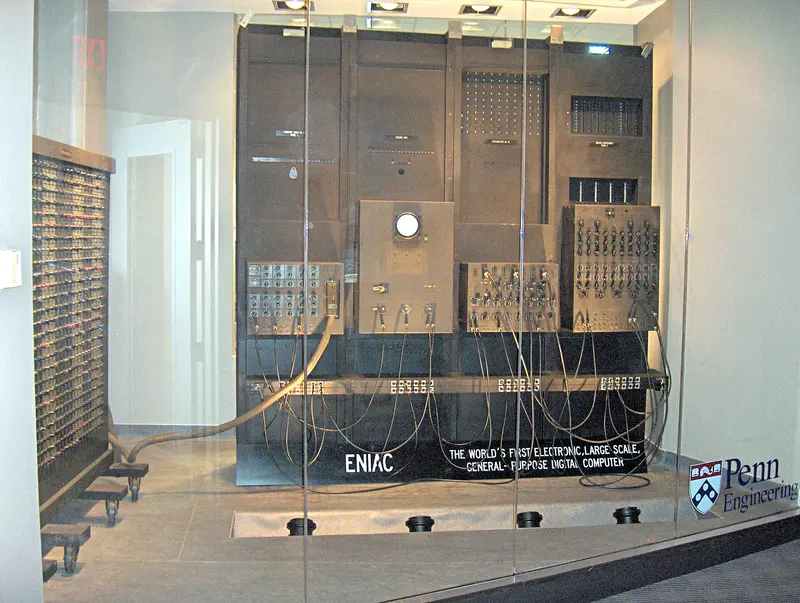
ENIAC, the first general-purpose electronic computer, is unveiled

ENIAC was formally dedicated, or officially presented, at the University of Pennsylvania in Philadelphia, USA. It was the first programmable, electronic, general-purpose computer, which means it could be reprogrammed to solve many kinds of problems. Newspapers called it a 'Giant Brain'. It worked about a thousand times faster than earlier electro-mechanical machines.

Two tall panels of the ENIAC computer covered in dials, switches and plugs, on display behind glass
Two pieces of the ENIAC computer on display at the University of Pennsylvania Photo: The original uploader was TexasDex at English Wikipedia, CC BY-SA 3.0
1949 77 years ago

Archaeologists begin digging in the cave of the Dead Sea Scrolls

British archaeologist Gerald Lankester Harding and French scholar Roland de Vaux began excavating Cave 1 at Qumran, near the Dead Sea. This was the cave where the first seven Dead Sea Scrolls had been found. The scrolls are ancient Jewish writings, made between the 3rd century BC and the 1st century AD. They include the oldest surviving copies of whole books of the Bible.

1965 61 years ago

Canada raises its new Maple Leaf flag

Canada adopted its red and white Maple Leaf flag, which has an 11-pointed red maple leaf in the middle. It replaced the Canadian Red Ensign, a flag with the British Union Jack in its corner. The Maple Leaf is now the best-known symbol of Canada. Every year, 15 February is marked as National Flag of Canada Day.

2001 25 years ago

Scientists publish the first draft of the human genome

The first draft of the complete human genome was published in the British science journal Nature. The human genome is the complete set of human DNA, made up of more than three billion small units. The work came from the Human Genome Project, the world's largest shared biology project. Scientists in the USA, the UK and other countries took part.

1862 164 years ago

American Civil War: Confederates commanded by Brig. Gen. John B. Floyd attack General Ulysses S. Grant's Union forces besieging Fort Donelson in Tennessee. Unable to break the fort's encirclement, the Confederates surrender the following day.

1879 147 years ago

Women's rights: US President Rutherford B. Hayes signs a bill allowing female attorneys to argue cases before the Supreme Court of the United States.

1899 127 years ago

Tsar Nicholas II of Russia issues a declaration known as the February Manifesto, which reduces the autonomy of the Grand Duchy of Finland, thus beginning the first period of oppression.

Quick quiz

Every answer is somewhere on this page. Have a go, then check!

  1. In which year did this happen: “King George VI is buried at St George's Chapel, Windsor”?

    1. 2001
    2. 1214
    3. 1952
    Show the answer

    C: 1952. 1952 — that’s 74 years ago. Find it on the page

  2. In which year did this happen: “King John lands in France to win back his lost lands”?

    1. 1214
    2. 1493
    3. 1923
    Show the answer

    A: 1214. 1214 — that’s 812 years ago. Find it on the page

  3. Which of these happened first?

    1. King George VI is buried at St George's Chapel, Windsor
    2. King John lands in France to win back his lost lands
    3. Decimal Day: Britain switches to pounds and new pence
    Show the answer

    B: King John lands in France to win back his lost lands. 1952: King George VI is buried at St George's Chapel, Windsor · 1214: King John lands in France to win back his lost lands · 1971: Decimal Day: Britain switches to pounds and new pence Find it on the page

  4. “Decimal Day: Britain switches to pounds and new pence” happened in 1971. How many years ago was that?

    1. 55 years
    2. 45 years
    3. 65 years
    Show the answer

    A: 55 years. 2026 − 1971 = 55. Find it on the page

Born on this day 36

Famous people whose birthday is 15 February.

Remembering 21

Well-known people who died on 15 February.

Special days 16

Festivals, holidays and saints’ days celebrated on 15 February somewhere in the world.

For older readers 22 Show stories about war, disasters, crime and other difficult history

Content note: these entries mention things like war, violence, deaths, disasters or crime. They are part of history, but they can be upsetting. Grown-ups and teachers: you may want to read them first. They come straight from Wikipedia and have not been rewritten for children.

Where these facts come from

Stories with a heading have been written for young readers by A Day in the Past, using the linked articles as sources. Other entries show text from Wikipedia’s “February 15” page and its “On this day” feed, written by Wikipedia contributors and shared under the Creative Commons Attribution-ShareAlike 4.0 licence. Each “Read more” link goes to the article an entry is based on. Photos are credited under each picture. Spotted a mistake? Please tell us.