A Day in the Past

On this day: 17 December

137 things happened on 17 December, from 497 BC to 2020. UK stories come first, then the rest of the world.

Printable worksheet Take the quiz

Did you know?

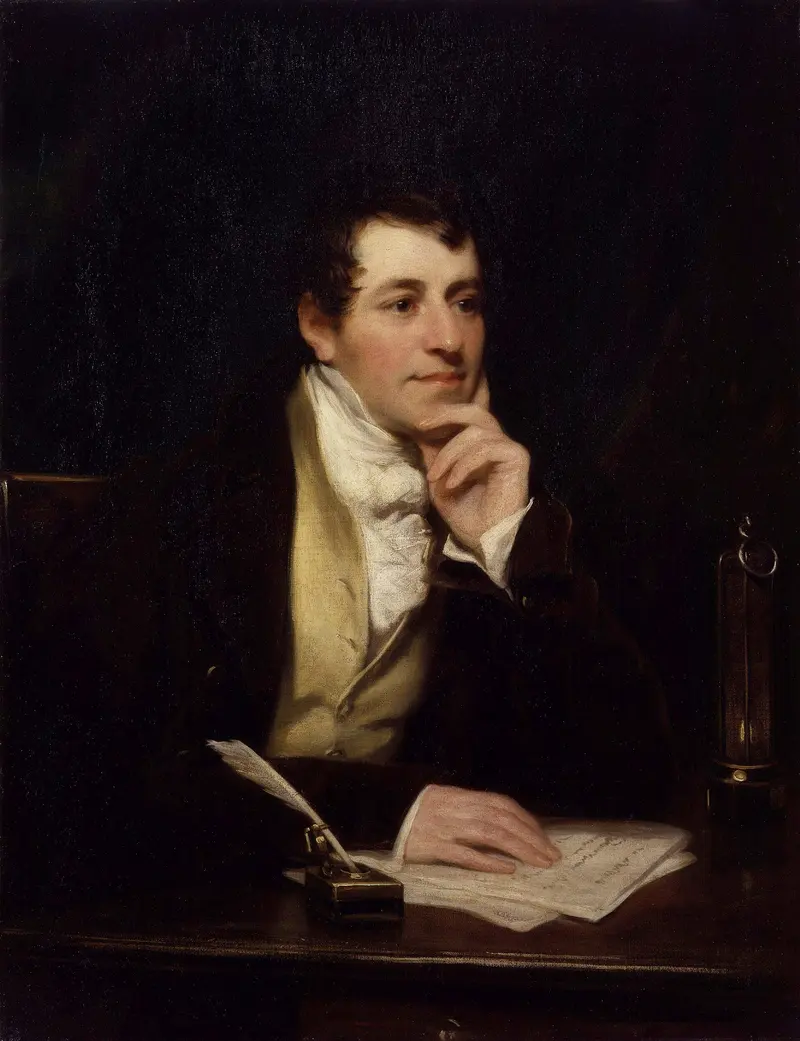
Painted portrait of Humphry Davy with dark curly hair, resting his chin on his hand beside a table with a quill and papers
Photo: Thomas Phillips, Public domain

1778 · 248 years ago

Born: Humphry Davy

Sir Humphry Davy was a British chemist and inventor. He invented the Davy lamp, a lamp that could be used safely in coal mines. Using electricity, he was the first to separate out several elements, including potassium, sodium and calcium. This work started a …
In the UK 3

UK history first: stories from England, Scotland, Wales and Northern Ireland.

1538 488 years ago

UK story

Pope Paul III excommunicates King Henry VIII

Pope Paul III excommunicated King Henry VIII of England, shutting him out of the Catholic Church. Henry had already broken away from the Pope and made himself Supreme Head of the Church of England. Earlier that year, his government had pulled down the shrine of St Thomas Becket at Canterbury Cathedral. The Pope also took away Henry's title 'Defender of the Faith', but English monarchs kept using it.

1665 361 years ago

UK story

The first account of a blood transfusion is published

The first written account of a blood transfusion was published in the Royal Society's journal, Philosophical Transactions. It was a letter from the physician Richard Lower to the chemist Robert Boyle. A blood transfusion moves blood into someone's body through their veins. Philosophical Transactions began in 1665 and is the world's longest-running science journal.

Around the world 38

497 BC 2,522 years ago

Ancient Rome holds the first Saturnalia festival

The Romans celebrated Saturnalia, a festival in honour of the god Saturn, for the first time. Saturnalia featured a public feast, followed by gift-giving and partying at home. Normal rules were turned upside down, and masters even served meals to their slaves. Over time the festival grew to last seven days, until 23 December.

1790 236 years ago

The Aztec sun stone is rediscovered in Mexico City

The Aztec sun stone was dug up in the Zócalo, the main square of Mexico City, during repairs to the city's cathedral. This giant carved stone is 3.6 metres across and weighs about 24.6 tonnes. It had been buried soon after the Spanish conquered the Aztecs. It is now in the National Anthropology Museum and is a symbol of Mexican culture.

1819 207 years ago

Simón Bolívar declares the independence of Gran Colombia

Simón Bolívar declared the independence of Gran Colombia at Angostura, now called Ciudad Bolívar, in Venezuela. Gran Colombia was a large country covering much of northern South America. It included what are now Colombia, Ecuador, Panama and Venezuela. Bolívar led several countries to independence from Spain and is known as 'the Liberator'.

1865 161 years ago

Schubert's 'Unfinished' Symphony is performed for the first time

Franz Schubert's Symphony in B minor, known as the 'Unfinished' Symphony, was performed for the first time. Schubert started it in 1822 but finished only two movements, or sections. He lived for six more years without completing it. Schubert was an Austrian composer who wrote more than 1,000 pieces of music in his short life.

1903 123 years ago

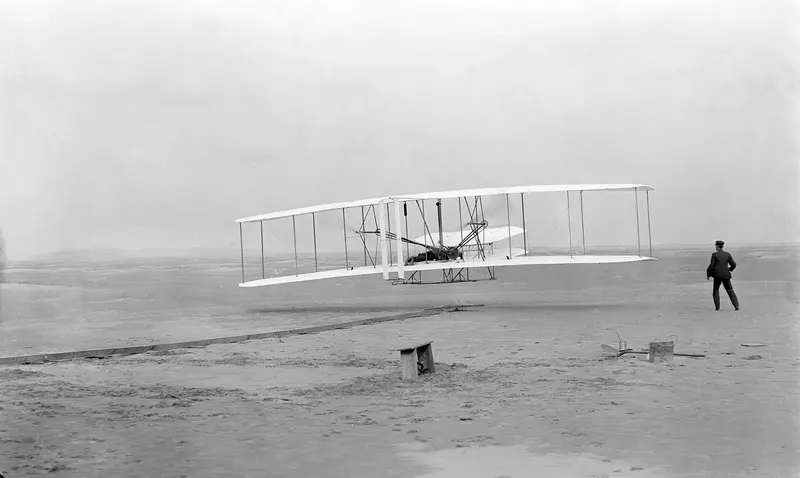
The Wright brothers make the first powered aeroplane flight

Orville and Wilbur Wright made the first controlled, sustained flight in an engine-powered aeroplane. Their aircraft, the Wright Flyer, flew near Kitty Hawk in North Carolina, USA. The brothers had designed and built it themselves. Their success marked the start of the pioneer era of flying.

Black-and-white photo of an early biplane with long white wings flying just above sandy ground, with a man watching from the side
The first successful flight of the Wright Flyer at Kitty Hawk, North Carolina, on 17 December 1903 (photo by John T. Daniels) Photo: John T. Daniels, Public domain
The Story a Photo Tells - Wright Brothers' First Flight — Smithsonian National Air and Space Museum on YouTube. The video loads from YouTube when you press play. Watch on YouTube
1935 91 years ago

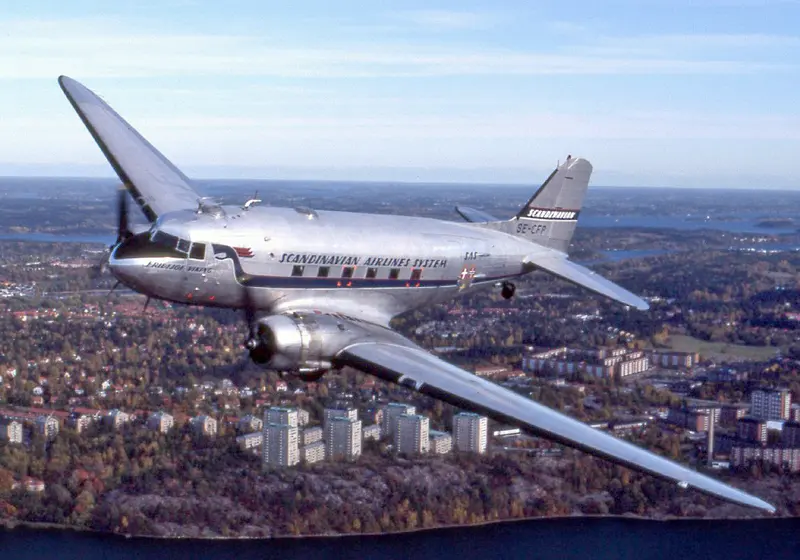
The Douglas DC-3 airliner makes its first flight

The Douglas DC-3, a propeller-driven airliner with two engines, made its first flight from Santa Monica in California. It was first planned as a sleeper aircraft with 14 beds. The DC-3 could carry 21 to 32 passengers and cruise at 333 km/h. It had a lasting effect on air travel from the 1930s through the Second World War.

A shiny silver twin-propeller airliner flying low over a town and water
A Douglas DC-3 airliner in flight Photo: Towpilot, CC BY-SA 3.0
1938 88 years ago

Otto Hahn discovers nuclear fission

German chemist Otto Hahn discovered nuclear fission, working with Lise Meitner and Fritz Strassmann. Fission happens when the nucleus, or centre, of an atom splits into smaller parts, releasing a huge amount of energy. This discovery is the science behind nuclear reactors. Hahn alone was awarded the 1944 Nobel Prize in Chemistry for it.

2003 23 years ago

SpaceShipOne makes its first powered flight

SpaceShipOne, an experimental rocket plane flown by test pilot Brian Binnie, made its first powered flight. It was also its first flight faster than the speed of sound. The next year it made the first crewed private spaceflight. It then won the 10 million US dollar Ansari X Prize and was retired.

1918 108 years ago

About 1,000 demonstrators marched (pictured) on Government House in Darwin, Australia, where they burned an effigy of Administrator John Gilruth and demanded his resignation.

Quick quiz

Every answer is somewhere on this page. Have a go, then check!

  1. In which year did this happen: “Pope Paul III excommunicates King Henry VIII”?

    1. 1778
    2. 1903
    3. 1538
    Show the answer

    C: 1538. 1538 — that’s 488 years ago. Find it on the page

  2. In which year did this happen: “The first account of a blood transfusion is published”?

    1. 1945
    2. 1538
    3. 1665
    Show the answer

    C: 1665. 1665 — that’s 361 years ago. Find it on the page

  3. Which of these happened first?

    1. Simón Bolívar declares the independence of Gran Colombia
    2. The first account of a blood transfusion is published
    3. Pope Paul III excommunicates King Henry VIII
    Show the answer

    C: Pope Paul III excommunicates King Henry VIII. 1819: Simón Bolívar declares the independence of Gran Colombia · 1665: The first account of a blood transfusion is published · 1538: Pope Paul III excommunicates King Henry VIII Find it on the page

  4. “Humphry Davy” happened in 1778. How many years ago was that?

    1. 248 years
    2. 238 years
    3. 258 years
    Show the answer

    A: 248 years. 2026 − 1778 = 248. Find it on the page

Born on this day 40

Famous people whose birthday is 17 December.

Remembering 17

Well-known people who died on 17 December.

Special days 13

Festivals, holidays and saints’ days celebrated on 17 December somewhere in the world.

For older readers 26 Show stories about war, disasters, crime and other difficult history

Content note: these entries mention things like war, violence, deaths, disasters or crime. They are part of history, but they can be upsetting. Grown-ups and teachers: you may want to read them first. They come straight from Wikipedia and have not been rewritten for children.

Where these facts come from

Stories with a heading have been written for young readers by A Day in the Past, using the linked articles as sources. Other entries show text from Wikipedia’s “December 17” page and its “On this day” feed, written by Wikipedia contributors and shared under the Creative Commons Attribution-ShareAlike 4.0 licence. Each “Read more” link goes to the article an entry is based on. Photos are credited under each picture. Spotted a mistake? Please tell us.