A Day in the Past

On this day: 2 November

119 things happened on 2 November, from AD 971 to 2024. UK stories come first, then the rest of the world.

Printable worksheet Take the quiz

Did you know?

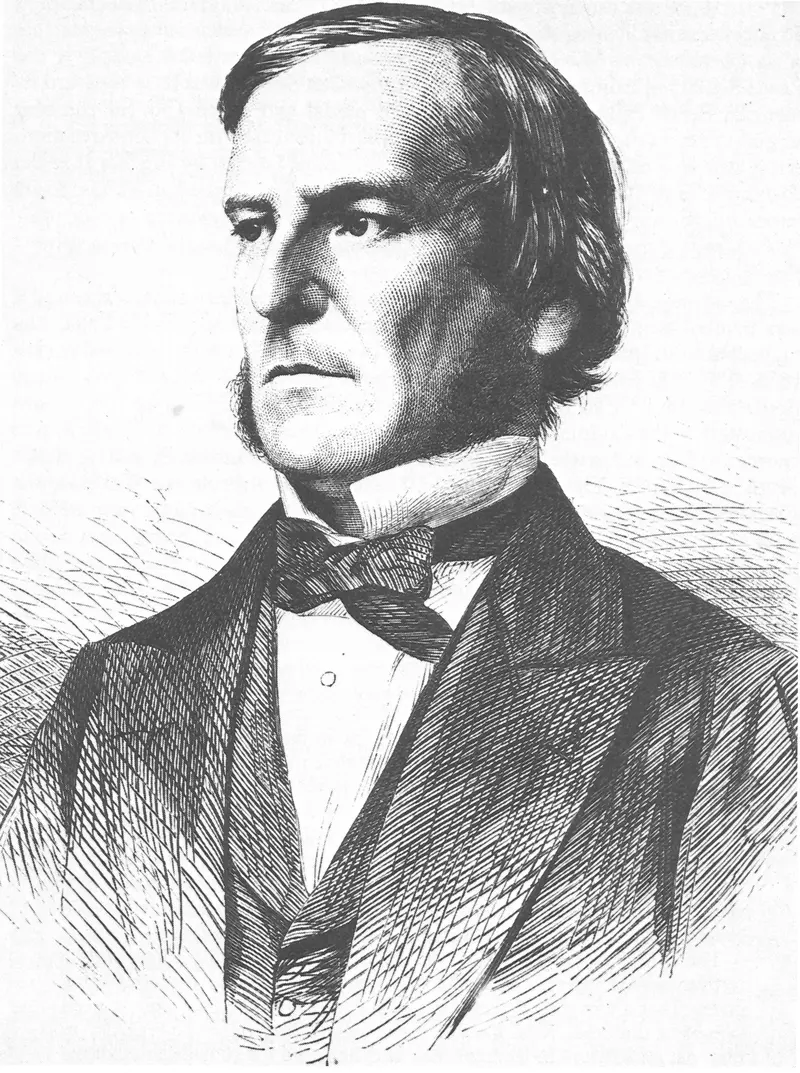
Black and white engraving of a man with swept-back hair, wearing a dark coat and a bow tie
Photo: Unknown author, Public domain

1815 · 211 years ago

Born: George Boole

The English mathematician and philosopher George Boole was born. Logic is the study of how we reason, and for centuries it had been treated as a question of language. Boole changed that by turning logic into a kind of algebra, using equations and binary value…
In the UK 11

UK history first: stories from England, Scotland, Wales and Northern Ireland.

1899 127 years ago

UK story

The Siege of Ladysmith begins in South Africa

During the Second Boer War, Boer forces surrounded the British-held town of Ladysmith in Natal, South Africa. A siege is when an army surrounds a place to cut it off. The Boers were descendants of early settlers in southern Africa, and their name comes from the Dutch word for ‘farmer’. The siege lasted 118 days, until 28 February 1900.

1917 109 years ago

UK story

Britain issues the Balfour Declaration about Palestine

During the First World War, the British government announced its support for a ‘national home for the Jewish people’ in Palestine. The statement was written as a letter from the Foreign Secretary, Arthur Balfour, to Lord Rothschild, a leader of Britain's Jewish community. At the time, Palestine was part of the Ottoman Empire, and most of the people living there were Arabs.

1936 90 years ago

UK story

The BBC starts the world's first regular high-definition TV service

The BBC Television Service began its regular programmes. It was the world's first regular ‘high-definition’ TV service. In those days, high-definition meant a picture made from at least 200 lines. The channel was renamed BBC1 in 1964, and as BBC One it is still the BBC's oldest channel.

How BBC television first went live - BBC News — BBC News on YouTube. The video loads from YouTube when you press play. Watch on YouTube
1959 67 years ago

UK story

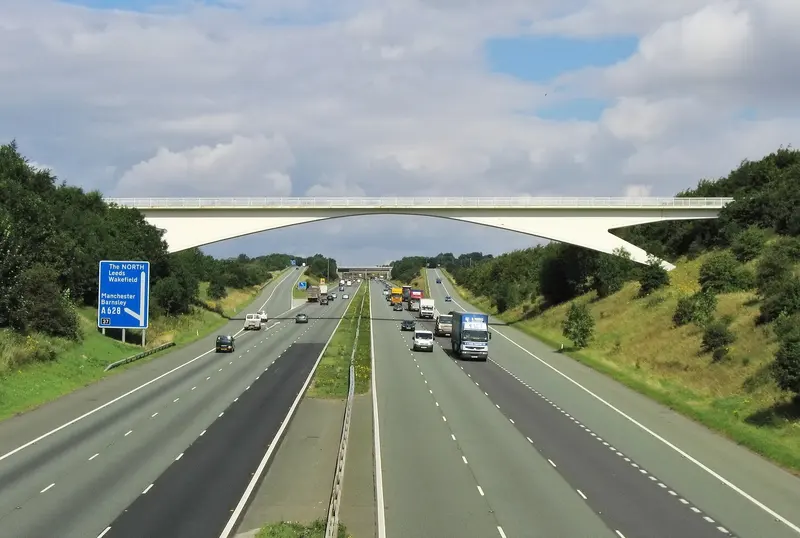
The first section of the M1 motorway opens

The first stretch of the M1 opened to traffic, along with two shorter motorways, the M10 and the M45. It was the first inter-urban motorway in the United Kingdom, meaning a motorway built to link cities. Britain's very first motorway was actually the Preston Bypass, which later became part of the M6. The finished M1 connects London with Leeds.

A wide motorway with traffic running under a concrete bridge, with green fields and trees on either side
The M1 motorway in Yorkshire, south of Leeds Photo: Klaus with K, CC BY-SA 3.0
1982 44 years ago

UK story

Channel 4 goes on air for the first time

Channel 4 started broadcasting as Britain's fourth television channel. Until then, viewers could only choose between BBC1, BBC2 and ITV. Channel 4 is owned by the public, but unlike the BBC it receives no public money. Instead, it pays its way through things like advertising.

2008 18 years ago

UK story

Lewis Hamilton wins the Formula One title by just one point

British racing driver Lewis Hamilton won the Formula One World Championship in dramatic style. In the final corners of the Brazilian Grand Prix, he overtook the German driver Timo Glock. That move gave him the title by a single point. Hamilton went on to win seven world titles, a joint record he shares with Michael Schumacher.

Around the world 25

1868 158 years ago

New Zealand adopts one standard time for the whole country

New Zealand officially chose a standard time to be used right across the country. An area where everyone keeps the same official time is called a time zone. Time zones usually follow the borders of countries rather than exact lines on a map, because it is handy for places that work together to share the same clock time. The main islands of New Zealand keep a standard time that is 12 hours ahead of Coordinated Universal Time (UTC).

1983 43 years ago

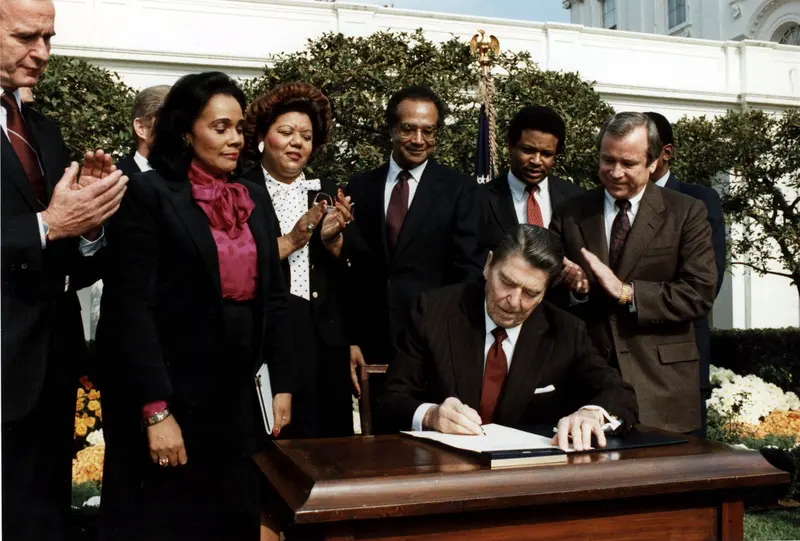
Ronald Reagan signs the law creating Martin Luther King Jr. Day

US President Ronald Reagan signed a law creating a national holiday in honour of Martin Luther King Jr. King was the chief spokesperson of the civil rights movement. It used peaceful protest to challenge laws that treated people unfairly because of their race. The holiday is held on the third Monday of January each year.

A president sitting at a wooden desk signing a paper outdoors, while smiling people in suits stand around him and clap
President Ronald Reagan signs the bill making Martin Luther King Jr.'s birthday a national holiday, in the White House Rose Garden on 2 November 1983 Photo: White House Photo Office, Public domain
2000 26 years ago

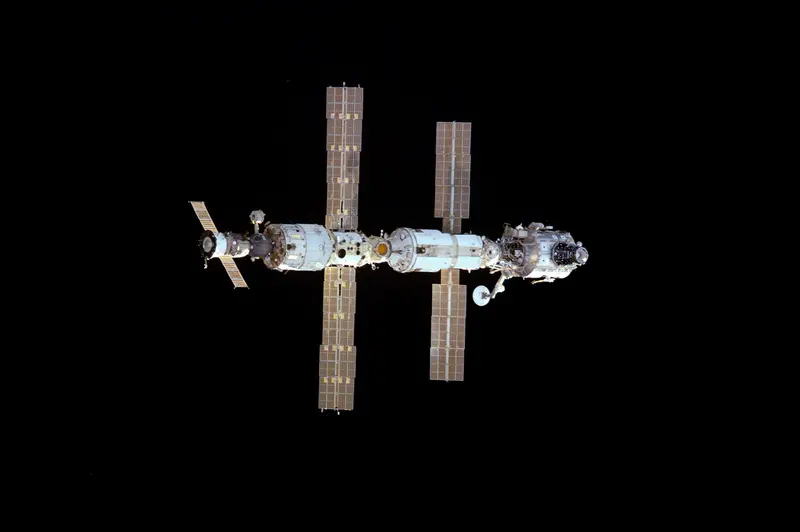
The first crew moves in to the International Space Station

American astronaut William Shepherd and Russian cosmonauts Sergei Krikalev and Yuri Gidzenko arrived at the International Space Station. Known as Expedition 1, they were the station's first resident crew, and they stayed on board for 136 days. Their arrival began an unbroken run of people living on the station that was still going in 2026.

A space station made of white cylinders with large golden solar panels, floating against black space
The International Space Station, photographed by the crew of Space Shuttle Endeavour on mission STS-97 Photo: NASA, Public domain
1947 79 years ago

In California, designer Howard Hughes performs the maiden (and only) flight of the Hughes H-4 Hercules (also known as the "Spruce Goose"), the largest fixed-wing aircraft ever built until Scaled Composites rolled out their Stratolaunch in May 2017.

Quick quiz

Every answer is somewhere on this page. Have a go, then check!

  1. In which year did this happen: “Lewis Hamilton wins the Formula One title by just one point”?

    1. 2008
    2. 1959
    3. 1936
    Show the answer

    A: 2008. 2008 — that’s 18 years ago. Find it on the page

  2. In which year did this happen: “Britain issues the Balfour Declaration about Palestine”?

    1. 1936
    2. 2008
    3. 1917
    Show the answer

    C: 1917. 1917 — that’s 109 years ago. Find it on the page

  3. Which of these happened first?

    1. Lewis Hamilton wins the Formula One title by just one point
    2. Britain issues the Balfour Declaration about Palestine
    3. The Siege of Ladysmith begins in South Africa
    Show the answer

    C: The Siege of Ladysmith begins in South Africa. 2008: Lewis Hamilton wins the Formula One title by just one point · 1917: Britain issues the Balfour Declaration about Palestine · 1899: The Siege of Ladysmith begins in South Africa Find it on the page

  4. “The Siege of Ladysmith begins in South Africa” happened in 1899. How many years ago was that?

    1. 127 years
    2. 117 years
    3. 137 years
    Show the answer

    A: 127 years. 2026 − 1899 = 127. Find it on the page

Born on this day 38

Famous people whose birthday is 2 November.

Remembering 18

Well-known people who died on 2 November.

Special days 10

Festivals, holidays and saints’ days celebrated on 2 November somewhere in the world.

For older readers 17 Show stories about war, disasters, crime and other difficult history

Content note: these entries mention things like war, violence, deaths, disasters or crime. They are part of history, but they can be upsetting. Grown-ups and teachers: you may want to read them first. They come straight from Wikipedia and have not been rewritten for children.

Where these facts come from

Stories with a heading have been written for young readers by A Day in the Past, using the linked articles as sources. Other entries show text from Wikipedia’s “November 2” page and its “On this day” feed, written by Wikipedia contributors and shared under the Creative Commons Attribution-ShareAlike 4.0 licence. Each “Read more” link goes to the article an entry is based on. Photos are credited under each picture. Spotted a mistake? Please tell us.