A Day in the Past

On this day: 28 September

146 things happened on 28 September, from 551 BC to 2023. UK stories come first, then the rest of the world.

Printable worksheet Take the quiz

Did you know?

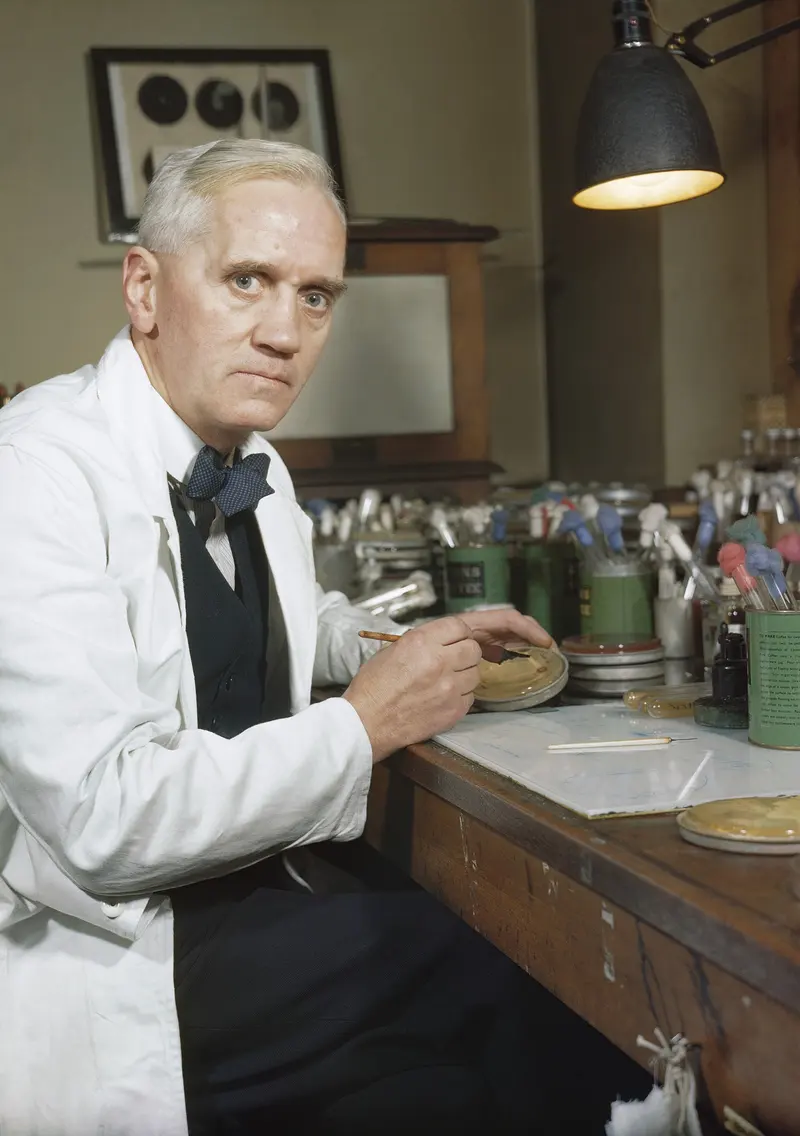
A man in a white lab coat and bow tie sitting at a laboratory bench with dishes and bottles
Photo: Official photographer, Public domain

1928 · 98 years ago

Alexander Fleming discovers penicillin

Scottish scientist Alexander Fleming noticed that a mould growing in his laboratory was killing bacteria. The substance it made became known as penicillin, the first antibiotic ever discovered. Antibiotics are medicines that fight infections caused by bacteri…
In the UK 6

UK history first: stories from England, Scotland, Wales and Northern Ireland.

1066 960 years ago

UK story

William of Normandy lands at Pevensey to invade England

William, Duke of Normandy, landed at Pevensey in Sussex with a fleet of around 600 ships. His arrival was the start of the Norman Conquest of England. William went on to defeat Harold Godwinson's Anglo-Saxon army at the Battle of Hastings. He became the first Norman king of England and is remembered as William the Conqueror.

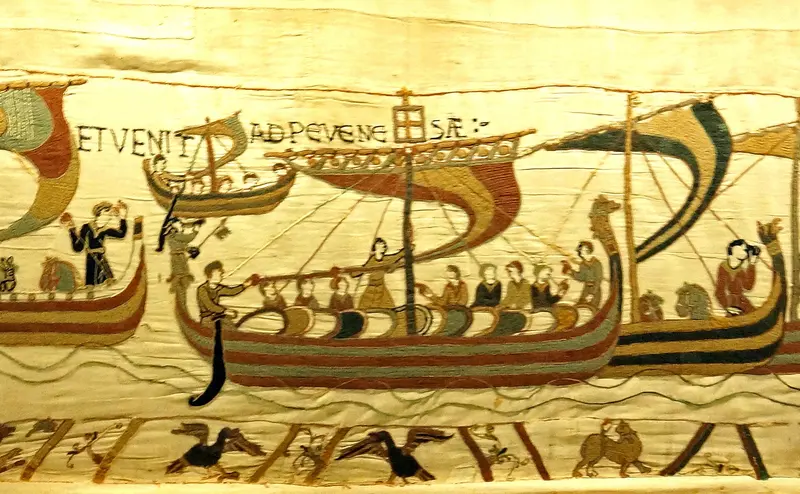
Embroidered picture of wooden sailing ships with colourful sails, full of men and horses, crossing the sea
Duke William's ships crossing the sea to Pevensey, shown on the Bayeux Tapestry Photo: Dennis G. Jarvis, CC BY-SA 2.0
1106 920 years ago

UK story

Henry I captures his brother Robert at the Battle of Tinchebray

King Henry I of England invaded Normandy and fought the army of his older brother, Robert Curthose, Duke of Normandy. Henry's knights won a clear victory at Tinchebray and captured Robert. Henry kept his brother as a prisoner, first in England and later in Wales, for the rest of Robert's life.

1912 114 years ago

UK story

Nearly half a million people sign the Ulster Covenant

The Ulster Covenant was a solemn promise signed by nearly 500,000 people in Ulster, on and before this day. They were protesting against the Third Home Rule Bill, a British government plan to give Ireland self-government within the United Kingdom. The signers were Unionists, who wanted to keep Ireland's union with England, Scotland and Wales. The date is still marked in Northern Ireland as Ulster Day.

1928 98 years ago

UK story

Alexander Fleming discovers penicillin

Scottish scientist Alexander Fleming noticed that a mould growing in his laboratory was killing bacteria. The substance it made became known as penicillin, the first antibiotic ever discovered. Antibiotics are medicines that fight infections caused by bacteria. Fleming later shared the 1945 Nobel Prize for the discovery, which has been called one of the greatest victories ever won over disease.

A man in a white lab coat and bow tie sitting at a laboratory bench with dishes and bottles
Professor Alexander Fleming, who discovered penicillin, in his laboratory Photo: Official photographer, Public domain
A Miracle From A Mould AKA Alexander Fleming & Penicillin Discovery (1944) — British Pathé on YouTube. The video loads from YouTube when you press play. Watch on YouTube
2023 3 years ago

UK story

The famous Sycamore Gap tree on Hadrian's Wall is cut down

The Sycamore Gap tree grew in a dip beside Hadrian's Wall in Northumberland. It was one of the most photographed trees in the country and won England's Tree of the Year award in 2016. It was also called the Robin Hood tree because it appeared in a 1991 Robin Hood film. The tree was illegally cut down, leaving only its stump.

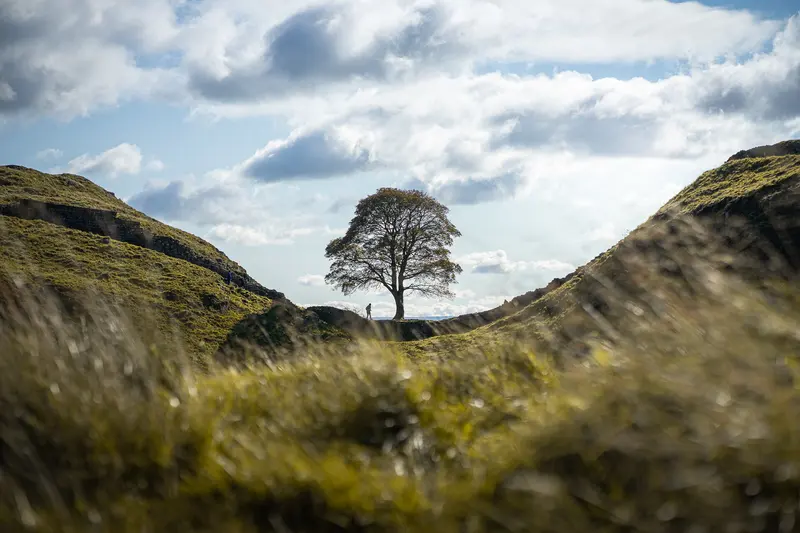
A single tree standing in a dip between two grassy hills under a cloudy sky
The Sycamore Gap tree, standing in a dip by Hadrian's Wall Photo: Clementp.fr, CC BY-SA 4.0

Around the world 33

1542 484 years ago

Explorer Juan Rodríguez Cabrillo arrives at what is now San Diego

Juan Rodríguez Cabrillo, a Portuguese explorer sailing for the Spanish Empire, arrived at what is now San Diego in California. He was the first European to explore the coast of present-day California. His voyage along the coast lasted from 1542 into the following year.

1781 245 years ago

The Siege of Yorktown begins in the American War of Independence

American and French forces, backed by a French fleet, began a siege of British troops at Yorktown. The British army there was led by Charles Cornwallis, while the Americans were led by George Washington. Yorktown became the last major land battle of the American War of Independence. Washington's victory there helped the Americans win the war against Britain.

1889 137 years ago

An international conference defines the length of a metre

An international conference on weights and measures, known as the CGPM, set out the length of the metre. The metre had been introduced during the French Revolution as a measurement based on nature. It was first defined as one ten-millionth of the distance from the North Pole to the equator, along a line through Paris. One agreed length means people everywhere can measure things in the same way.

1924 102 years ago

American airmen complete the first flight around the world

A team from the United States Army Air Service landed in Seattle, completing the first flight all the way around the world. The journey took 175 days and covered more than 42,000 kilometres. Four airmen from an eight-man team finished the trip, flying two single-engined planes with open cockpits. For most of the journey the planes were fitted with floats so they could land on water.

1963 63 years ago

Roy Lichtenstein's pop art painting Whaam! goes on show

Whaam!, a painting by American artist Roy Lichtenstein, was shown to the public for the first time at a gallery in New York City. Lichtenstein was famous for large paintings inspired by comic books. Whaam! is made of two panels and is one of the best-known works of pop art. The Tate bought it in 1966, and it hangs in Tate Modern in London.

1972 54 years ago

Canada beats the Soviet Union in ice hockey's Summit Series

Canada's ice hockey team beat the team from the Soviet Union to win the Summit Series. The contest took place during the Cold War, a long rivalry between the United States, the Soviet Union and their allies. The nickname 'Team Canada' was first used for this series. It is still used for Canada's national hockey teams.

Quick quiz

Every answer is somewhere on this page. Have a go, then check!

  1. In which year did this happen: “Alexander Fleming discovers penicillin”?

    1. 1963
    2. 1928
    3. 1781
    Show the answer

    B: 1928. 1928 — that’s 98 years ago. Find it on the page

  2. In which year did this happen: “William of Normandy lands at Pevensey to invade England”?

    1. 1106
    2. 1066
    3. 1746
    Show the answer

    B: 1066. 1066 — that’s 960 years ago. Find it on the page

  3. Which of these happened first?

    1. The famous Sycamore Gap tree on Hadrian's Wall is cut down
    2. Alexander Fleming discovers penicillin
    3. William of Normandy lands at Pevensey to invade England
    Show the answer

    C: William of Normandy lands at Pevensey to invade England. 2023: The famous Sycamore Gap tree on Hadrian's Wall is cut down · 1928: Alexander Fleming discovers penicillin · 1066: William of Normandy lands at Pevensey to invade England Find it on the page

  4. “Henry I captures his brother Robert at the Battle of Tinchebray” happened in 1106. How many years ago was that?

    1. 930 years
    2. 920 years
    3. 910 years
    Show the answer

    B: 920 years. 2026 − 1106 = 920. Find it on the page

Born on this day 40

Famous people whose birthday is 28 September.

Remembering 20

Well-known people who died on 28 September.

Special days 19

Festivals, holidays and saints’ days celebrated on 28 September somewhere in the world.

For older readers 28 Show stories about war, disasters, crime and other difficult history

Content note: these entries mention things like war, violence, deaths, disasters or crime. They are part of history, but they can be upsetting. Grown-ups and teachers: you may want to read them first. They come straight from Wikipedia and have not been rewritten for children.

Where these facts come from

Stories with a heading have been written for young readers by A Day in the Past, using the linked articles as sources. Other entries show text from Wikipedia’s “September 28” page and its “On this day” feed, written by Wikipedia contributors and shared under the Creative Commons Attribution-ShareAlike 4.0 licence. Each “Read more” link goes to the article an entry is based on. Photos are credited under each picture. Spotted a mistake? Please tell us.