A Day in the Past

On this day: 21 February

115 things happened on 21 February, from AD 4 to 2022. UK stories come first, then the rest of the world.

Printable worksheet Take the quiz

Did you know?

In the UK 6

UK history first: stories from England, Scotland, Wales and Northern Ireland.

1746 280 years ago

UK story

Jacobites win the siege of Inverness

During the Jacobite rising of 1745, supporters of Prince Charles Edward Stuart surrounded Old Fort George, a castle in Inverness held by government soldiers. The Jacobites began digging a tunnel under the walls so that they could blow them up. Fearing this, the fort's commander, Major George Grant, surrendered. The Jacobites wanted to win back the British throne for the Stuart family, who were living in exile.

1804 222 years ago

UK story

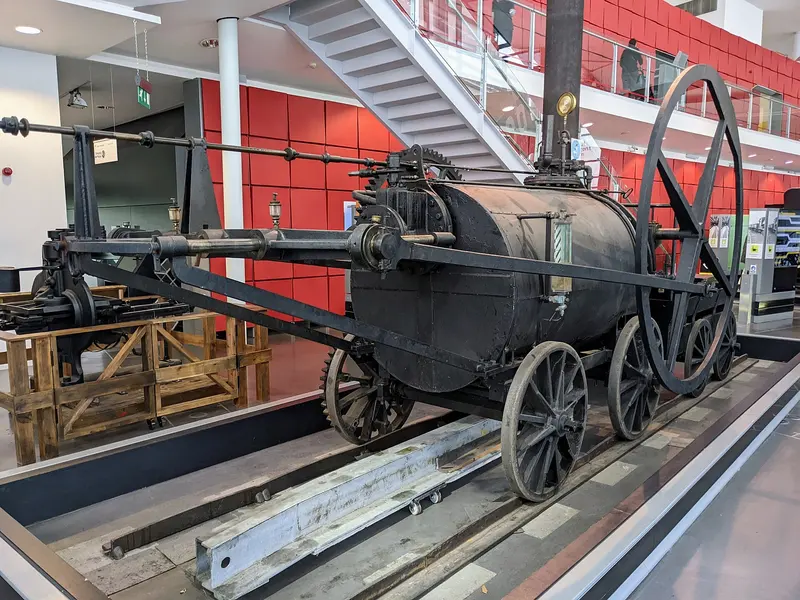
Trevithick's steam locomotive makes the first railway journey

Cornish inventor Richard Trevithick's steam engine pulled a train along the tramway of the Penydarren Ironworks in Merthyr Tydfil, Wales. It was the world's first railway journey hauled by a locomotive. The engine carried 10 tons of iron, five wagons and 70 men for 9.75 miles (about 15.7 km). The trip took just over four hours, at an average speed of about 2.4 miles per hour.

A black early steam locomotive with a tall chimney and a big flywheel, standing on rails in a museum
A replica of Richard Trevithick's Penydarren locomotive at the National Waterfront Museum, Swansea Photo: The wub, CC BY-SA 4.0
1952 74 years ago

UK story

People in Britain no longer have to carry identity cards

It stopped being necessary for people in the United Kingdom to carry an identity card. The cards had been brought in at the start of the Second World War in 1939, when about 45 million were issued. Even children under 16 had one, although their parents kept it for them. Prime Minister Winston Churchill's government ended the rule to 'set the people free'.

1958 68 years ago

UK story

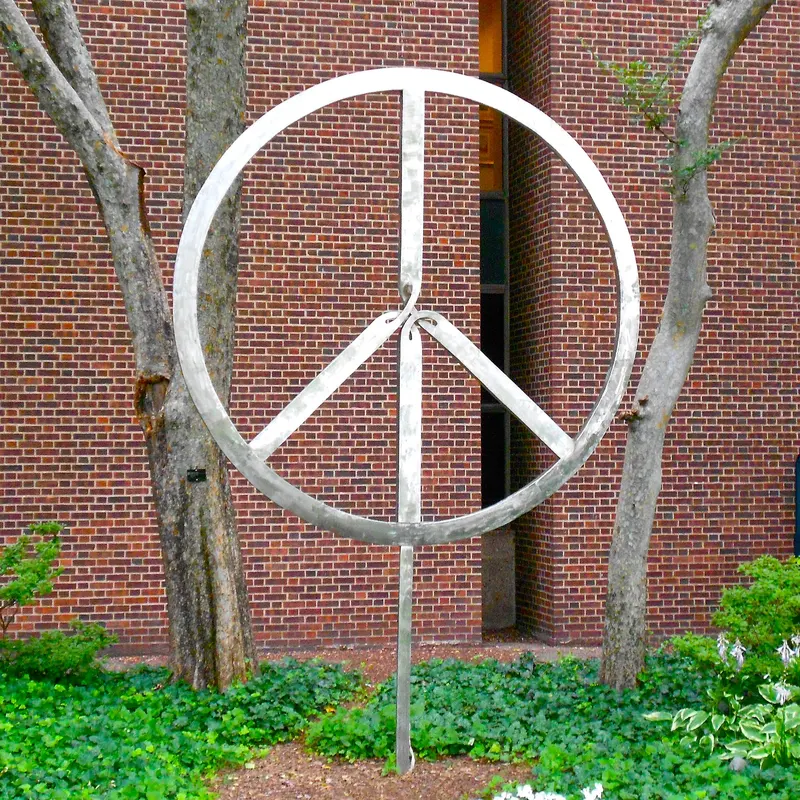
Gerald Holtom presents his design for the peace symbol

British designer Gerald Holtom showed his new symbol to the Direct Action Committee, a group campaigning against nuclear weapons. It was accepted straight away and became the logo of the Campaign for Nuclear Disarmament (CND). The design joins together the flag signals, called semaphore, for the letters N and D, standing for 'nuclear disarmament'. It is now known around the world as the peace sign.

A large stainless steel peace symbol sculpture standing between two trees in front of a brick building
A steel Peace Symbol sculpture by Robert Engman at the University of Pennsylvania, installed in 1967 Photo: Smallbones, CC0
1896 130 years ago

UK story

An Englishman raised in Australia, Bob Fitzsimmons, fights an Irishman, Peter Maher, in an American promoted event which technically takes place in Mexico, winning the 1896 World Heavyweight Championship in boxing.

Around the world 27

1828 198 years ago

The first Native American newspaper is published

The first issue of the Cherokee Phoenix was printed in New Echota, the capital of the Cherokee Nation, in what is now the United States. It was the first newspaper published by Native Americans and the first in a Native American language. It was written in both English and Cherokee. The paper stopped in 1834 but was brought back in the 20th century, and it is still published today.

1842 184 years ago

John Greenough gets the first US patent for a sewing machine

American John Greenough was granted the first United States patent for a sewing machine. A patent is an official document that protects an inventor's idea from being copied. Sewing machines stitch fabric together with thread far faster than sewing by hand. The very first sewing machine is generally thought to be the work of an Englishman, Thomas Saint, in 1790.

1885 141 years ago

The Washington Monument is dedicated

The newly finished Washington Monument was dedicated in Washington, D.C., in the United States. It honours George Washington, the country's first president. The monument is a tall, pointed stone pillar called an obelisk, about 169 metres high. Its outside is covered in three different kinds of white marble, because the building work kept being interrupted.

1947 79 years ago

Edwin Land shows off the first instant camera

In New York City, American inventor Edwin Land demonstrated the Polaroid Land Camera to a meeting of the Optical Society of America. It was the first 'instant camera'. Its special film developed by itself, so a finished photograph was ready in one minute or less. The camera went on sale the following year.

1972 54 years ago

Soviet robot spacecraft Luna 20 lands on the Moon

Luna 20, an uncrewed Soviet spacecraft, made a gentle landing in a mountainous area of the Moon. It used a drill to collect a small sample of Moon soil. The next day, part of the spacecraft blasted off carrying the soil in a sealed capsule, which came down safely in the Soviet Union on 25 February. It was the second successful Soviet mission to bring Moon samples back to Earth.

1995 31 years ago

Steve Fossett flies solo across the Pacific in a balloon

American adventurer Steve Fossett landed in Leader, Saskatchewan, Canada. He had become the first person to fly alone across the Pacific Ocean in a balloon. Fossett set many records as a pilot and a sailor. He was also the first person to fly solo, without stopping, all the way around the world in both a balloon and an aeroplane.

1808 218 years ago

Without a previous declaration of war, Russian troops cross the border to Sweden at Abborfors in eastern Finland, thus beginning the Finnish War, in which Sweden will lose the eastern half of the country (i.e. Finland) to Russia.

Quick quiz

Every answer is somewhere on this page. Have a go, then check!

  1. In which year did this happen: “People in Britain no longer have to carry identity cards”?

    1. 1952
    2. 1946
    3. 1842
    Show the answer

    A: 1952. 1952 — that’s 74 years ago. Find it on the page

  2. In which year did this happen: “Jacobites win the siege of Inverness”?

    1. 1885
    2. 1907
    3. 1746
    Show the answer

    C: 1746. 1746 — that’s 280 years ago. Find it on the page

  3. Which of these happened first?

    1. People in Britain no longer have to carry identity cards
    2. Trevithick's steam locomotive makes the first railway journey
    3. Jacobites win the siege of Inverness
    Show the answer

    C: Jacobites win the siege of Inverness. 1952: People in Britain no longer have to carry identity cards · 1804: Trevithick's steam locomotive makes the first railway journey · 1746: Jacobites win the siege of Inverness Find it on the page

  4. “Trevithick's steam locomotive makes the first railway journey” happened in 1804. How many years ago was that?

    1. 222 years
    2. 212 years
    3. 232 years
    Show the answer

    A: 222 years. 2026 − 1804 = 222. Find it on the page

Born on this day 39

Famous people whose birthday is 21 February.

Remembering 18

Well-known people who died on 21 February.

Special days 12

Festivals, holidays and saints’ days celebrated on 21 February somewhere in the world.

For older readers 13 Show stories about war, disasters, crime and other difficult history

Content note: these entries mention things like war, violence, deaths, disasters or crime. They are part of history, but they can be upsetting. Grown-ups and teachers: you may want to read them first. They come straight from Wikipedia and have not been rewritten for children.

Where these facts come from

Stories with a heading have been written for young readers by A Day in the Past, using the linked articles as sources. Other entries show text from Wikipedia’s “February 21” page and its “On this day” feed, written by Wikipedia contributors and shared under the Creative Commons Attribution-ShareAlike 4.0 licence. Each “Read more” link goes to the article an entry is based on. Photos are credited under each picture. Spotted a mistake? Please tell us.